A Branded Game Licence Clears the Character. It Does Not Clear the Font, the Song or the Voice.
When you license branded games, the character licence is the part everyone reads. The rights that stall the build sit underneath it: fonts, music, voice.
The signature happens, the style guide arrives as a 60-page PDF, and the production schedule gets drawn from the approval calendar. Everybody on the call now believes the game is cleared. It is not. What has been cleared is one layer: the right to put a specific character, in specific approved poses, into a specific product, in a specific territory, for a specific term.
Underneath that sit four other rights layers, each owned by somebody who was not on the call. The typeface in the HUD. The music bed. The voice saying the character's catchphrase. The third-party asset or SDK the studio dropped into the build in week two. None of them travel with the character licence, and none of them are the licensor's problem. They are yours, because you are the one shipping the product.
This is a common reason a branded game misses its campaign window, and it rarely shows up in the risk register. Here is each layer, and the schedule to ask for before you sign anything.
🎭 What a Character Licence Actually Grants
A character licence is narrower than it feels. In practice it grants the right to reproduce approved depictions of the character, sourced from or matching a style guide the licensor controls, inside a defined product, on defined platforms, in a defined territory, for a defined term. Character licensing agreements typically specify that only depictions of characters and accompanying artwork, designs and other elements designated by the licensor in a style guide may be used, alongside approval rights over packaging, marketing and modifications.
Read what that sentence does not say. It says nothing about the typographic system you use for menus. Nothing about the score. Nothing about who performs the character's lines, or on what terms. Nothing about the physics library or particle pack the studio pulled in to hit the deadline.
Licensors are not being evasive. They do not own those things, and a clause promising otherwise would be a warranty they cannot make. The gap is structural. The mistake buyers make is reading a document that is scrupulously precise about one layer and treating its silence on the other four as coverage.
One consequence up front: if you are re-skinning an existing HTML5 title into a branded version — the fastest route to a branded game, and the one most campaigns take — all four layers are already populated by somebody else's choices. You are not clearing a blank build. You are inheriting one.
🔤 The Typeface Is Licensed Per Title, and Your Web Licence Does Not Count
Fonts catch the most people, because every brand already has a corporate typeface and everybody assumes it is handled. It usually is not. Corporate font licences are typically bought as desktop and web licences — the web variant lets you serve the font via @font-face from your own domain, priced against monthly pageviews. Embedding the same font inside a compiled game build is a different licence class entirely.
The terms are specific and they are worth reading before you commit a UI design. ROHH Type Foundry's Video Game License permits you to "securely embed the font software into the compiled code or engine of the specific game title" covering in-game text, HUDs and user interfaces. It is bounded by a "Distribution Limit" defined as "the maximum permitted number of copies sold, installations, or Monthly Active Users (MAU)... as specified on Your invoice or license confirmation." Exceed it and you buy an upgrade.
Three exclusions in that same licence matter more than the grant:
- It covers one title. Sequels, expansions and different game titles need their own licence. If your campaign ships six branded mini-games, that is potentially six licences, not one.
- It does not cover marketing. The trailer, the landing page, the app store screenshots — the video game licence explicitly excludes marketing trailers and the game's primary logo, which need separate desktop, logo or broadcast licences.
- It does not cover web embedding. Embedding via
@font-faceinto websites, non-game applications or SaaS platforms requires separate licensing. A web licence does not cover game embedding, and a game licence does not cover your portal chrome.
That last point bites hardest on HTML5. A branded HTML5 game sitting inside a white-label game portal is arguably crossing the boundary in both directions — the game embeds the font in its build, and the surrounding portal serves it as a webfont. Foundries differ on how they construe this. The cheap answer is to design the game UI on a font whose licence you actually control, and let the brand's corporate typeface live in the marketing layer where its existing licence already sits. That is a five-minute decision in week one and a four-week renegotiation in week nine.
🎵 Music Is Two Copyrights, and the Brand Usually Owns Neither
"Use the track from the TV spot" is a request that arrives on almost every branded game project, and it is the point at which a two-week schedule becomes a two-month one.
The reason is that a recorded song is not one asset. The U.S. Copyright Office is explicit that copyright in a sound recording "is not the same as, or a substitute for, copyright in the underlying musical composition." They are separate works, and the Office notes they may be registered together only if ownership of both is exactly the same — which, for commercially released music, it usually is not. The composition sits with the songwriter or publisher. The recording sits with the label or artist.
So using an existing track in a game means two clearances from two rights holders, either of whom can say no or price you out independently. And the brand's own clearance for the TV spot does not carry over: sync licences are granted for defined media, terms and territories. "Broadcast, 12 months, US" does not include "interactive game, perpetual, worldwide web." Nobody is being difficult. It is simply a different grant.
Decide in the brief, not in production, which of three routes you are on: commission original music and own it outright; use a library where composition and recording rights are bundled into one grant; or budget real time and money for a two-party clearance on a named track. All three are legitimate. Only the third has a failure mode that lands two weeks before launch.
🎙️ Voice Is Where Brand Requirements and Performer Agreements Collide
If the character has an established voice, the brand will very often require it, and that requirement is where a lot of otherwise straightforward branded games acquire a contract problem.
The relevant framework changed recently. SAG-AFTRA members ratified the 2025 Interactive Media Agreement on 9 July 2025 with roughly 95% approval, ending an eleven-month strike. Its central innovation is around digital replicas: as Frankfurt Kurnit's analysis of the agreement puts it, "Performers must consent to the use of their Digital Replica, and producers must provide a 'reasonably specific description' of how they intend to use the Digital Replicas."
This is a union agreement binding on signatory producers, not a statute of general application — plenty of HTML5 game production sits entirely outside it. But if the brand's approved voice talent works under it, or the character's existing recordings were made under it, the constraint reaches your project through the brand's own approval requirements even if you never sign anything with the union yourself.
The practical trigger is localisation. A campaign runs in one market, performs, and someone asks for it in four more. "We will just generate the extra lines" is now a consent question with a required specificity standard attached, not a tooling question. So is reusing existing recordings from a different production in a new interactive context — that is a re-use with its own terms, and the original session almost certainly did not contemplate a browser game.
The design answer that survives all of this: build the game so it works with no voice at all, and treat voice as an enhancement layer added after clearance completes. Text, sound design and character animation carry the personality perfectly well in casual formats. A game that cannot ship without a voice line has put a third party's calendar on your critical path.
🧩 The Assets Already Inside the Build
The fourth layer is the one nobody inspects, because it is invisible in a playable link: whatever the studio imported to make the deadline. Particle packs, UI kits, physics libraries, tweening frameworks, audio middleware, analytics SDKs.
These carry their own terms and those terms are frequently incompatible with onward licensing. Unity's Asset Store Terms of Service and EULA prohibit licensees from "sublicens[ing], rent[ing], leas[ing], lend[ing], sell[ing], trad[ing], resell[ing], or otherwise commercializ[ing] or monetiz[ing] any Asset" outside the express permissions, and frame the permitted use as incorporation into an application "that has a purpose, features, and functions beyond the display, performance, distribution, or use of Assets" where the asset "does not comprise a substantial portion." Certain items are designated "Restricted Assets" with narrower terms again, often because they carry open-source components with their own distribution conditions.
Ship the compiled game and you are generally fine. The friction starts at the two things branded work routinely asks for:
- Source delivery. A brand or agency that wants the project files so a different studio can maintain it is asking for a transfer that many asset EULAs do not permit — the licence often attached to the original developer's seat, not to the deliverable.
- Onward licensing. If your plan is to take the branded build and re-license it to a second market, a second partner or a second portal instance, you are the one making a sublicensing claim you may not be able to support.
Open-source components deserve a line in the same review. A permissively licensed library is usually fine; a copyleft one inside a build you intend to keep proprietary is far cheaper to find in week one than in a due-diligence request from the brand's legal team in week ten.
📋 The Clearance Schedule to Ask For Before You Sign
None of this needs a lawyer to start. It needs one document that most branded game projects never produce: a per-asset clearance schedule, drafted before the build begins. Ask whoever is delivering the game to fill in, for every layer:
- What is it. Font family, track, voice recording, third-party package, engine or framework.
- Who owns it. Named party, not "the studio has it covered."
- What licence class was bought. Desktop, web, game/app, broadcast; sync, master, or both; per-seat or per-product.
- What are the limits. Territory, term, distribution or MAU cap, platform list, single-title or multi-title.
- Is it transferable. Can the licence follow the build to another party, another market, another instance — and if not, what does it cost to re-clear?
- What happens at renewal. If the character licence renews for a second year but the font licence was capped at a distribution number you have now passed, who notices?
Two habits make this cheap. First, standardise the layers you control across every branded build you do — one font stack, one music source, one asset policy — so the clearance work is done once rather than per campaign. Second, prefer titles where the underlying build is already clean, so the only new clearance is the branded layer sitting on top of it.
That second habit is really an argument about where you source games from, which is worth being explicit about.
🛒 How It Works When You License HTML5 Games From a Direct Licensor
Sourcing matters here because the rights position of the underlying build is either known or it is not. Forestry Games has operated since 2017 and licenses a catalogue of 1,049 titles, developed in-house as well as licensed, covering HTML5 builds and Android APK builds under one conversation rather than two suppliers. A licence sets out what you can do with the titles — where they run, on which platforms, under which branding, for how long — so the scope questions above have answers before you build on top of them.
What that gets you in practice: HTML5 builds you can embed in a site, portal or app; APK builds for Android distribution where the same titles need a native shell; branding and re-skinning where the licence covers it; and hosting options if you would rather not run the delivery layer yourself. A catalogue of that size is not there to be taken whole — it is there so a specific need can be met from it, whether that is 200 titles for a carrier portal or six for a campaign. If you want to see the range before scoping anything, browse the catalogue or start with the HTML5 games and Android games sections directly.
🎬 Licensing Branded Games, With the Layers Already Considered
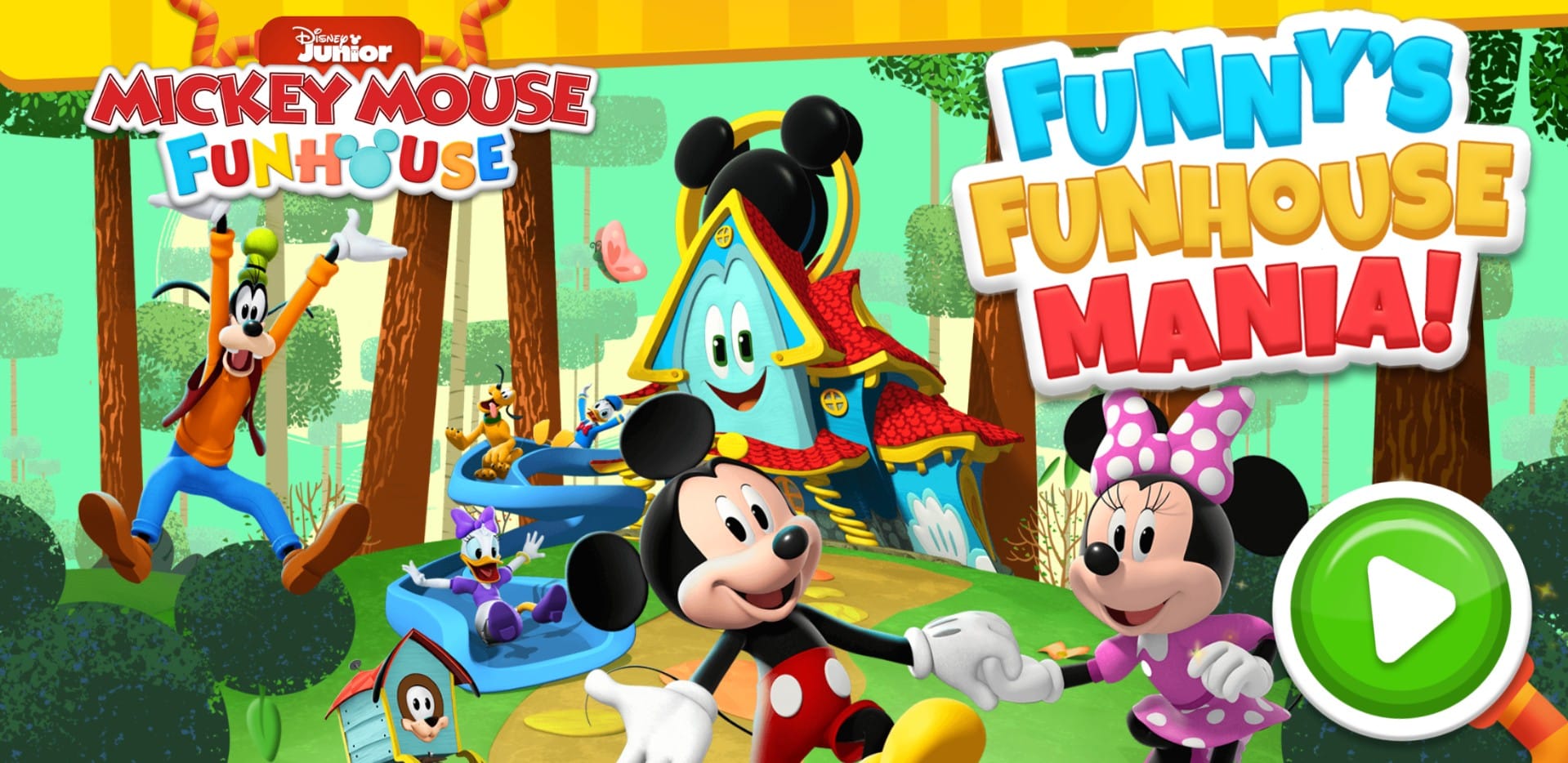
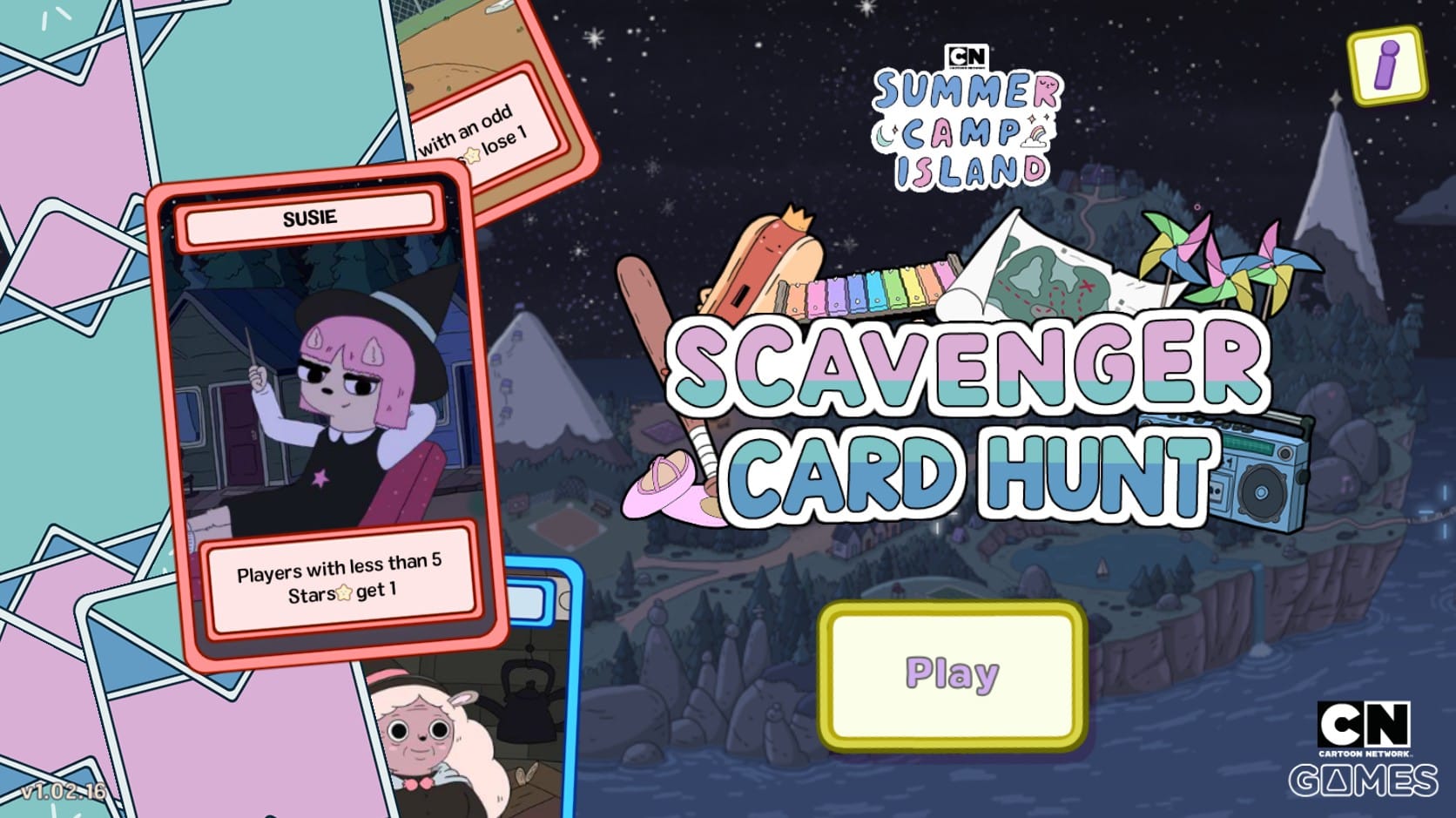
Forestry Games works with branded IP and has brand partnerships including Disney, Nickelodeon, Cartoon Network and Warner Bros. Businesses can license branded game content through Forestry Games for marketing campaigns, white-label portals, events and apps. That means the branded layer and the underlying build are handled in the same conversation rather than assembled from separate suppliers who each assume somebody else cleared the font.
If you have a campaign, portal or event with a date attached, the useful next step is a scope conversation rather than a catalogue browse: tell us the surfaces, territories, term and formats you need, and get a licence scope back that says what is covered. You can also look at the cartoon games and marketing games sections to see the shape of what character-led and campaign-led work looks like, or request a white-label portal demo if the endpoint is a portal rather than a single title.
✅ The Version of This to Remember
A branded game has five rights layers and the character licence is only the first one. The other four — typeface, composition, recording, and everything the studio imported — are owned by parties who were never in the room, priced by licence class rather than by goodwill, and bounded by limits that a campaign's success is precisely the thing most likely to breach.
The fix is not legal spend. It is sequencing. Draft the clearance schedule before the build brief, not after the playable. Design the game so nothing on the critical path depends on a third party's approval calendar. Standardise the layers you control so you clear them once instead of every campaign. And source the underlying build from somewhere the rights position is a stated licence rather than an assumption.
If your next branded project is already scheduled, start with the layer you can settle fastest: browse the catalogue, pick the titles that fit the format, and ask for a licence scope covering the territories, platforms and term you actually need. The font conversation is much easier when the build underneath it is not also an open question.