A Branded Game You Can't Move Isn't an Asset. It's a Media Buy With a Build Cost.
Brands commissioning a branded game in 2026 should settle one question first: can the finished game be moved? Portability separates an owned asset from ad spend. It is decided in the contract, not the art direction.
Almost everything else in a brand game project is downstream of that answer. Engine, session length, art style, which platform gets the launch — all of it follows from whether the thing you are paying for still exists, in a form you control, after the flight ends. A game that lives only inside a platform you do not own is a media buy that happened to require a production budget. A game you can host, re-skin, translate and redeploy is inventory. Both are legitimate purchases. They are not the same purchase, and they should not be priced as if they were.
The interesting thing about 2025 is that the market appears to have worked this out on its own.
🎯 Three Purchases Wearing the Same Two Words
"Branded game" is doing far too much work as a phrase. It covers at least three products that share almost no economics.
- An integration. Your brand appears inside someone else's game — a skin, an item, a level, a sponsored event. You are renting attention that already exists.
- A brand-owned world on a platform. You commission a bespoke experience inside Roblox, Fortnite or a similar environment. You control the creative. You do not control the runtime, the discovery surface, the policy, or the audience's reason for being there.
- A commissioned standalone game. A game built to run wherever you put it — your own site, a kiosk, a partner's portal, an app. You take delivery of a thing.
Agencies routinely quote all three against the same brief, and the pitch deck for each one leans on the same audience slide. The difference only shows up eighteen months later, when someone asks what happened to the game and the answer is either "it's still running on the campaign hub" or "the platform changed its policy."
📉 Brand-Owned Worlds Just Lost to Integrations
GEEIQ, which tracks brand activity across virtual worlds, published its State of Brands in Virtual Worlds 2026 analysis covering 2025 activity, drawing on platform-level tracking and a survey of more than 50 developer studios and creators. Three findings from it are worth sitting with.
First, concentration. Roblox and Fortnite together accounted for 88% of tracked brand activations in 2025. Whatever the pitch says about a diversified immersive strategy, in practice brands are placing bets on two companies' roadmaps.
Second, and more telling: for the first time, brand integrations outnumbered brand-owned worlds. The default move stopped being "build your own island" and became "show up where people already are."
Third, 173 experiences hosted integrations during the year, and 74% of them were doing it for the first time. Meanwhile the average brand ran 1.8 activations, the highest figure GEEIQ has recorded. Brands are running more, smaller, borrowed placements rather than fewer, larger owned ones.
That is a rational correction, not a retreat. A bespoke branded world has the same problem as a new games portal with no traffic plan: you have built a destination, and destinations need a reason for people to travel. An integration skips that problem entirely by borrowing an audience that is already sitting there.
But read the correction carefully, because the lesson is narrower than it looks. What brands abandoned was owned worlds inside platforms they don't control. That is not the same as abandoning ownership. It is discovering that ownership of the creative, without ownership of the runtime, buys you very little.
🍪 The Data Argument Quietly Died in 2025
For about four years, the strongest argument for commissioning your own game was not engagement. It was data. Third-party cookies were going away, the pitch ran, so brands needed owned environments that generated first-party signal. A game was an unusually good one: people stay, they come back, and they will hand over an email for a leaderboard.
That argument no longer has a deadline behind it. In April 2025 Google confirmed it would not deprecate third-party cookies in Chrome and would not ship the standalone choice prompt it had proposed the year before, keeping the existing cookie controls in place instead. Then, on 17 October 2025, it went further and retired most of the Privacy Sandbox — ten remaining APIs including Topics, Attribution Reporting and Protected Audience, across both Chrome and Android — citing low adoption. Deprecation was scheduled for Chrome M144 in January 2026 with removal in M150 in July 2026. Three narrower pieces survived: CHIPS, FedCM and Private State Tokens.
So the cliff the industry spent half a decade preparing for did not arrive. If your business case for building a game rested on an approaching data blackout, that case has to be rewritten.
This does not make game-derived data worthless. An opt-in from someone who chose to play for six minutes is a better signal than almost anything you can buy, and it is consented, which matters more every year rather than less. But it can no longer carry the business case on its own, and any agency still opening with the cookie slide is working from a 2023 deck.
📊 The Evidence That Got Stronger Argues for Buying, Not Building
Meanwhile, the measurement case for brands being in games improved considerably — and it is worth noticing which decision that evidence actually supports.
Ipsos, running its GameTrack study for Video Games Europe, surveyed 37,000 players across 16 European countries in Q1 2026 and compared players exposed to specific in-game brand integrations against those who had not played the relevant titles. Across nine campaigns, the average uplift on "is a brand for people like me" was +31%, against +6% for a control set of brands not advertising in the environment. Prompted advertising awareness rose by an average of 96%.
The averages are not the useful part. The spread is. Individual campaigns in that study ranged from +18% to +97% on the affinity measure — a fivefold difference in outcome across nine executions of the same broad tactic. Anyone quoting you the +31% as a planning assumption is quoting the midpoint of a very wide distribution, and the variable that moves you within it is execution, not format.
On the performance side, Liftoff's 2025 Mobile Ad Creative Index analysed 4.7 trillion impressions from January 2023 through May 2025 and reported that playable formats delivered 8x the impression-to-install rate of non-playables for top-spending game advertisers, and 16x for everyone else. Real numbers, but read the population: those are game advertisers driving installs on performance networks. They are not a benchmark for a beverage brand running a brand campaign, and they get quoted as one constantly.
Put the two together and the honest summary is this: there is good, recent, independently gathered evidence that being in games works for brands. There is no equivalent body of evidence that building your own game works better than buying into someone else's. If the only goal is a brand-lift number this quarter, the integration is the lower-risk buy, and pretending otherwise to win a production budget is how agencies lose clients in year two.
💸 Don't Let a Market-Size Slide Make the Decision
It will be offered to you anyway, so here is what that slide is worth. For the 2026 in-game advertising market, published estimates include roughly $10.3bn (360iResearch), $12.5bn (Research and Markets), $12.0bn (Global Growth Insights) — and $131bn (Mordor Intelligence). That last figure is more than ten times the others.
The firms are not incompetent; they are measuring different things. Some count only ads placed inside gameplay, others fold in the entire advertising business of gaming platforms and app-install spend. There is no way to reconcile them from the outside, which means a market-size number in a pitch tells you which report the agency subscribed to and nothing else.
The proportional figures hold up better. eMarketer put in-game advertising at about 2.3% of overall digital ad spending in 2026, noted that gaming attracts under 5% of worldwide media investment, and forecast US game ad revenues passing $10bn by 2029. Gaming is still a small slice of media budgets that is growing. That is the accurate framing, and it is a far less exciting slide than the one you will be shown.
🧳 What Portability Actually Buys
Here is the case for commissioning a game that does survive scrutiny, and it has nothing to do with data or market size. It is placement count.
A game delivered as HTML5 that you can host yourself can go, in sequence, from one campaign into the rest of the business:
- Embedded on the brand site or campaign hub, indefinitely, at hosting cost
- On tablets and kiosks at trade shows, where a queue at a screen is the point
- Inside the brand's own app as a loyalty or streak mechanic
- On a retail or venue screen, or on the shopper's phone via a QR code
- Bundled into a telecom or partner portal as sponsored content
- As a landing page for CRM and email, where the click has somewhere to go
- Re-skinned for the next market or the next season at a fraction of the original build
That last one is where the economics actually change. The second campaign costs a re-skin, not a build. The fourth costs a re-skin too. If you amortise a production budget across six placements over three years, the per-placement cost stops looking like a production budget and starts looking like a media rate — and it keeps working after the flight ends, which no media buy does.
None of that is available for a world built inside a platform. You cannot export it, cannot embed it in your own site, cannot put it on a kiosk at a trade fair, and cannot take it with you if the platform changes its rules. That is the whole argument, and it is enough on its own.
⚠️ How Brands Get This Wrong
The failure modes are consistent enough to list.
- Building a destination without a traffic plan. The game is not the campaign. The media that drives people to it is the campaign. Budget accordingly, and if there is no media budget left after the build, do not do the build.
- One placement, one flight, then dark. A game used once is the most expensive banner ad ever produced. Decide the second and third placements before you approve the first.
- No source delivery clause. Plenty of brands discover at the end of a project that they licensed the game rather than commissioned it, and cannot host it themselves. This is a contract question, not a technical one, and it is cheap to fix in advance and impossible to fix afterwards.
- A character licence shorter than the game's useful life. If the game features licensed IP, the game becomes unusable the day that licence lapses, no matter what your hosting contract says.
- Approvals treated as a formality. On any project involving a licensor, the review calendar is the schedule. Unbudgeted rework here eats the margin that made the project worth doing.
- Counting an integration as an owned asset. In the end-of-year deck it looks the same. In the balance sheet it is not.
✅ The Questions to Ask Before Signing
Whatever you are buying, these six answers determine what you own when it is over. Get them in writing.
- Do we take delivery of the source and assets, or a licence to a hosted build? If it is a licence, for how long, and on what renewal terms?
- Can we host it ourselves, on our own domain, without the developer's infrastructure?
- What are the re-skin and localisation rights, and what do subsequent versions cost?
- What is the platform and territory scope? Web only, or app and kiosk and partner portals too?
- If licensed IP is involved, when does that licence end, and what happens to the game on that date?
- Who owns the player data, and under what consent basis was it collected?
If the vendor cannot answer these in a first meeting, that is itself the answer.
🌲 Where This Fits With What We Do
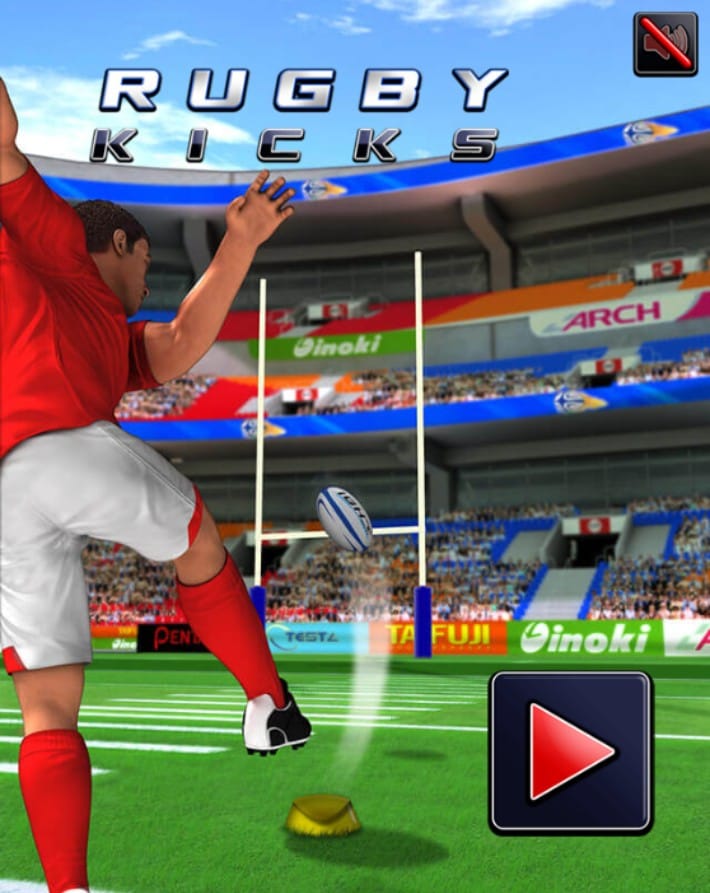
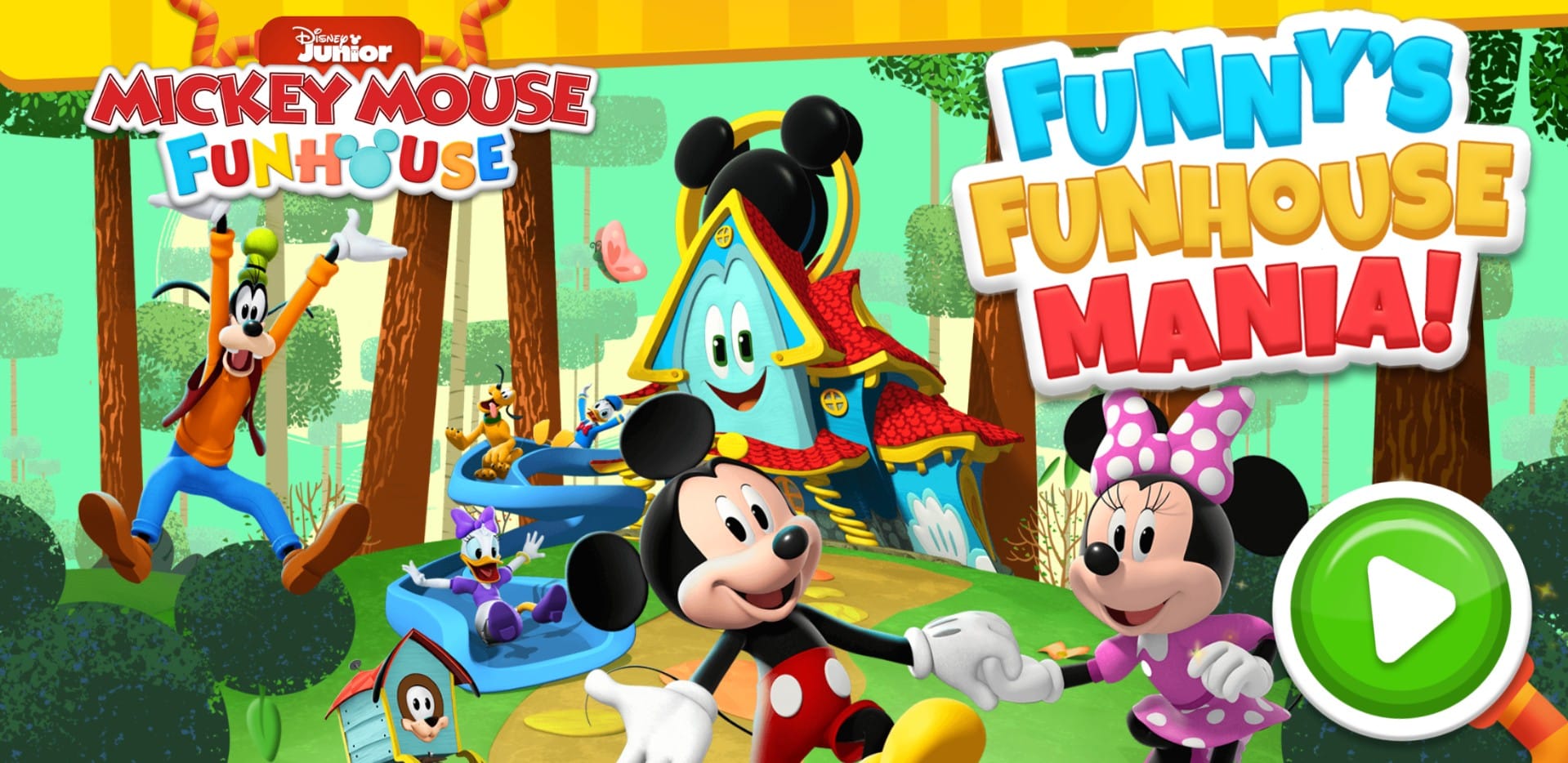
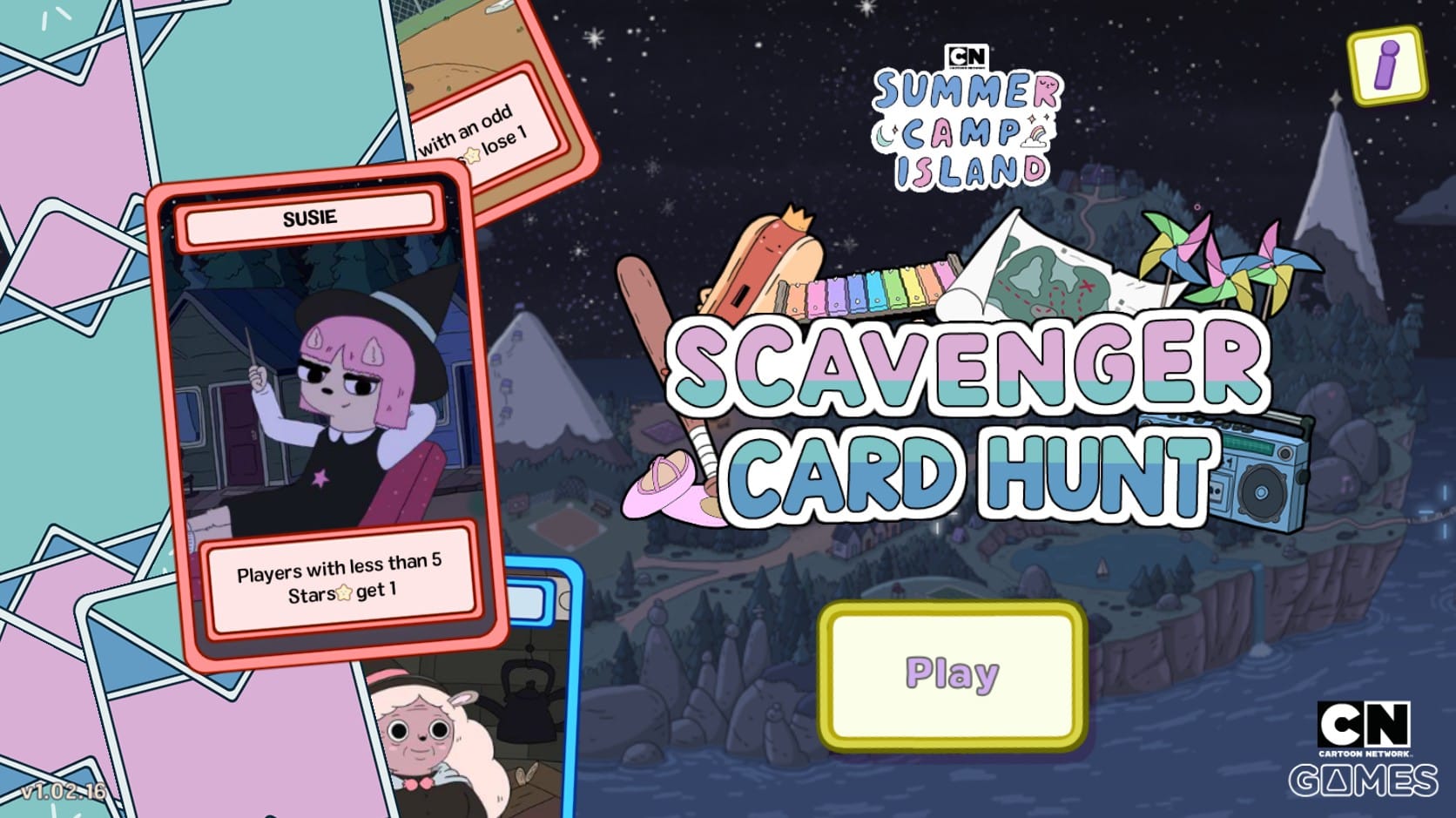
Forestry Games has been licensing and building games since 2017, with a catalogue of 1,049 HTML5 and Android titles, in-house HTML5 development, and work with branded IP including partnerships with Disney, Nickelodeon, Cartoon Network and Warner Bros. Most of the questions above come up in the first call, because they are the ones that determine whether a project is worth doing at all.
If a brand game is on your roadmap, the two useful starting points are marketing games, if the goal is a campaign you can redeploy, and trade show games, if the first placement is a stand. If the requirement is volume rather than a bespoke build, the catalogue and HTML5 games pages are the faster route.
🧭 Where to Start
Before you brief anyone, write down every place the finished game will appear over the next twenty-four months. Not the launch placement — all of them. Site, stand, app, partner portal, retail screen, second market, next season.
If that list has one item on it, buy an integration. The evidence supports it, it is cheaper, it carries less risk, and you will get a brand-lift number out of it. If the list has five or six, commission the build and make delivery of the source, self-hosting rights and re-skin terms non-negotiable, because those three clauses are the only things that turn the other five placements from a plan into an entitlement.
The question was never whether brands should be in games. It is whether you are buying attention or buying an asset — and the contract, not the brief, is where that gets decided.