Facebook Turns Off Web Games in September. The Chat Platforms Inheriting Them Are Not Interchangeable.
Meta shuts down Facebook Web Games on 30 September 2026. WeChat, Discord and Telegram now carry in-chat HTML5 games, and they are not interchangeable channels.
Facebook has been running browser games since 2007. It is the surface that made social web games a category, gave Zynga a business, and taught a generation of studios what a viral loop looked like. In six weeks it stops. Meta announced the sunset on 1 August 2025 alongside a new connection model called Network Enabled Zero Permissions, and the deadline has not moved.
Most of the commentary treats this as an obituary. It is closer to a redirection. Playable web content embedded inside a messaging app is the healthiest it has ever been — it just does not live on Facebook any more. The problem for anyone licensing or operating a catalogue is that the three platforms now carrying that traffic have almost nothing in common beyond the file format.
🔌 What Actually Happens on 30 September
The change has two halves, and operators keep conflating them.
Legacy Web Games — the desktop canvas-in-a-page format that has existed since the Flash era — are discontinued outright. There is no grandfathering. The migration path is to rebuild as an Instant Game.
Instant Games survive, but the permissions model changes. Any Instant Game created from 1 August 2025 onward had to ship with Zero Permissions from day one. Games created on or before 31 July 2025 were given until 30 September 2026 on the old connection experience. After that, no migration means no availability.
Zero Permissions removes the login and data-sharing prompt that used to sit between a player and the first frame. Meta's own numbers, reported when the change was announced, claim roughly twice as many players clear the loading step, with some integrations seeing up to 70% higher daily engagement. Take vendor-supplied uplift figures for what they are, but the mechanism is credible: every consent interstitial in front of a casual game is a funnel step, and casual games have no tolerance for funnel steps.
The trade is real, though. Zero Permissions limits what leaves Meta. If your monetization or your CRM depended on identifying the player outside the platform, that model is over. This is the pattern worth internalising, because it repeats on every surface below: you get frictionless reach and you give up the player record.
🧭 "Mini App" Describes a Format, Not a Market
WeChat Mini Games, Discord Activities and Telegram Mini Apps get lumped together in the same slide. They share a shape — a web build launched from inside a chat client, no install, sub-second entry — and diverge on everything that determines whether you can build a business there.
They differ on who the audience is, what the runtime actually is, who can legally publish, how money moves, and whether the platform's growth curve is real or borrowed. Three of the four questions an operator should be asking are platform-specific. Only the format ports.
🇨🇳 WeChat Is the Only One That Is Unambiguously a Games Market
The scale is not in dispute. PocketGamer.biz reported in June 2026 that WeChat Mini Games crossed 500 million monthly active users, supported by around 500,000 developers — up from roughly 400,000 the year before. Average daily playtime is over 60 minutes. Women make up 47% of players. Users aged 24 to 40 are about half the base, and over-40s account for another 40%, which makes this the least stereotypically "gamer" audience of the three by a wide margin.
More than 80% of the developers are teams of fewer than 30 people. That matters: it means the platform is not yet consolidated, and a small catalogue holder is not automatically outgunned.
The strategic signal is more interesting than the headline. Tencent has publicly shifted its stated priority from user acquisition to retention, saying future growth comes from improving retention, extending playtime and expanding genre adoption. Translated: the population ceiling has been hit. A platform saying that out loud is telling you the land grab is over and the operators who win from here are the ones with depth.
Two caveats before anyone books a flight. First, the WeChat mini game runtime is not a browser. It is a JavaScript environment with a canvas API and its own lifecycle, storage and payment interfaces — a Phaser or Cocos build needs an adaptation layer, not a copy-paste. Second, publishing commercially in China involves a local entity and regulatory approval for monetised content. That is a corporate-structure question with a lead time measured in months, not an integration ticket. Get actual China-side legal advice before you model revenue from it.
💬 Discord Is a Product Surface, Not a Portal
Discord Activities run as web apps inside an embedded frame, which makes them the shortest technical hop from an existing HTML5 build of anything on this list. But treating Discord as a traffic source is the wrong mental model, and its own data explains why.
In a March 2026 announcement, Discord reported 90+ million daily active users and, more usefully, some behavioural numbers: across the three months to 31 December 2025, PC players spent a median of six times longer playing with one friend present on Discord, and eight times longer with three friends. Voice channel users played games on 66% more days.
That is not a discovery statistic. It is a co-presence statistic. Discord is where a session gets longer because someone else is in it, which means the games that work there are the ones with a reason for a second person to be in the room. A single-player match-3 in a Discord Activity is a worse version of the same game on a web portal.
The commerce layer is early but pointed in a specific direction. Discord's Social SDK has been integrated by 15+ games since December 2024, with linked players showing a median 25% increase in days they launched the game and 16% longer play sessions. In a Marvel Rivals commerce pilot in December 2025, 41% of purchases were gifts, and 25% of gift buyers were lapsed or non-players. Quests reportedly hit a 96% median ad completion rate.
Read those together and the shape of the opportunity is clear: Discord monetises social relationships around a game, not impressions on it. If your catalogue is built for solo sessions and interstitials — the standard portal monetization stack — you are bringing the wrong product. Confirm current revenue-share terms directly with Discord rather than trusting secondhand percentages; the commerce programme is new and the published terms have moved.
✈️ Telegram Has the Reach and the Worst Evidence Base
Telegram Mini Apps are, technically, the simplest of the three. Per Telegram's own developer documentation, they are ordinary JavaScript web apps loaded in a webview, launched from bot buttons, inline mode, the attachment menu or a direct t.me link, with a small SDK script for platform integration. Payments run through third-party providers or Telegram Stars, the native currency. If you have a working HTML5 build, you can be live in days.
Which is exactly the problem. Low friction to publish produced an enormous volume of near-identical incentive apps, and the reliable independent data on audience and revenue has not kept pace. Almost every "Telegram Mini App market size" figure circulating right now traces back to a marketing blog citing another marketing blog. I am not going to repeat those numbers, because I could not verify a single one against a primary or independent source.
What is well documented is the cautionary tale. Hamster Kombat reached a reported 300 million players and became the emblem of the tap-to-earn wave. After its token launch, CCN reported the mini app down to roughly 12 million monthly players — a loss of over 96% — with the HMSTR token far below its debut price and around 130 million wallets eligible for an airdrop that many users called dust.
The lesson is not "Telegram is bad." It is that an audience assembled by a token incentive evaporates when the incentive resolves, and the peak number was never a business. Telegram remains a genuinely interesting surface for reaching users in markets where app-store distribution is weak. Just size it on retained cohorts you have measured yourself, not on a headline someone else printed.
🔑 On All Three, You Are Renting the Player
Facebook's Zero Permissions transition makes explicit what was already true everywhere else. The chat platform owns identity, the payment rail, the notification channel and the discovery surface. You are supplying content into someone else's product.
That is not disqualifying — carrier decks and app stores work the same way, and plenty of good businesses run on them. But it changes what a channel is worth. Revenue from a surface where you cannot export the player list, cannot reach them if the platform changes its ranking, and cannot migrate them to your own property is worth less per unit than the same revenue on a domain you control. Price it accordingly, and never let it become the only channel.
The practical hedge is to treat in-chat as an acquisition and reach layer sitting alongside a property you own — a white-label portal or your own site — rather than as a replacement for one. Same games, two homes, one of which cannot be switched off by an announcement in a developer changelog.
🚫 The Mistakes That Make This Channel Look Worse Than It Is
- Porting the catalogue instead of choosing from it. Discord wants co-op and competitive; WeChat rewards depth and long sessions; Telegram rewards fast loops in low-bandwidth markets. Shipping the same 200 titles to all three produces three mediocre launches.
- Assuming a web build is a mini app. Only Telegram is close to a plain webview. WeChat needs a runtime adaptation. Discord runs framed with its own constraints on networking and asset delivery. Budget engineering time per platform, not once.
- Treating platform MAU as your addressable market. Nobody reaches a chat platform's whole user base. Discovery inside these clients is narrow, and on two of the three it is largely social rather than editorial.
- Building the business on a permissions model. Meta just deleted one with 14 months' notice. If your unit economics need a specific data-sharing scope to survive, they are on a timer.
- Missing the migration deadline and calling it a market decline. Titles that vanish from Facebook on 1 October because nobody filed the migration are not evidence that web games are dying. They are evidence that nobody read the changelog.
🎮 Where a Licensed Catalogue Fits
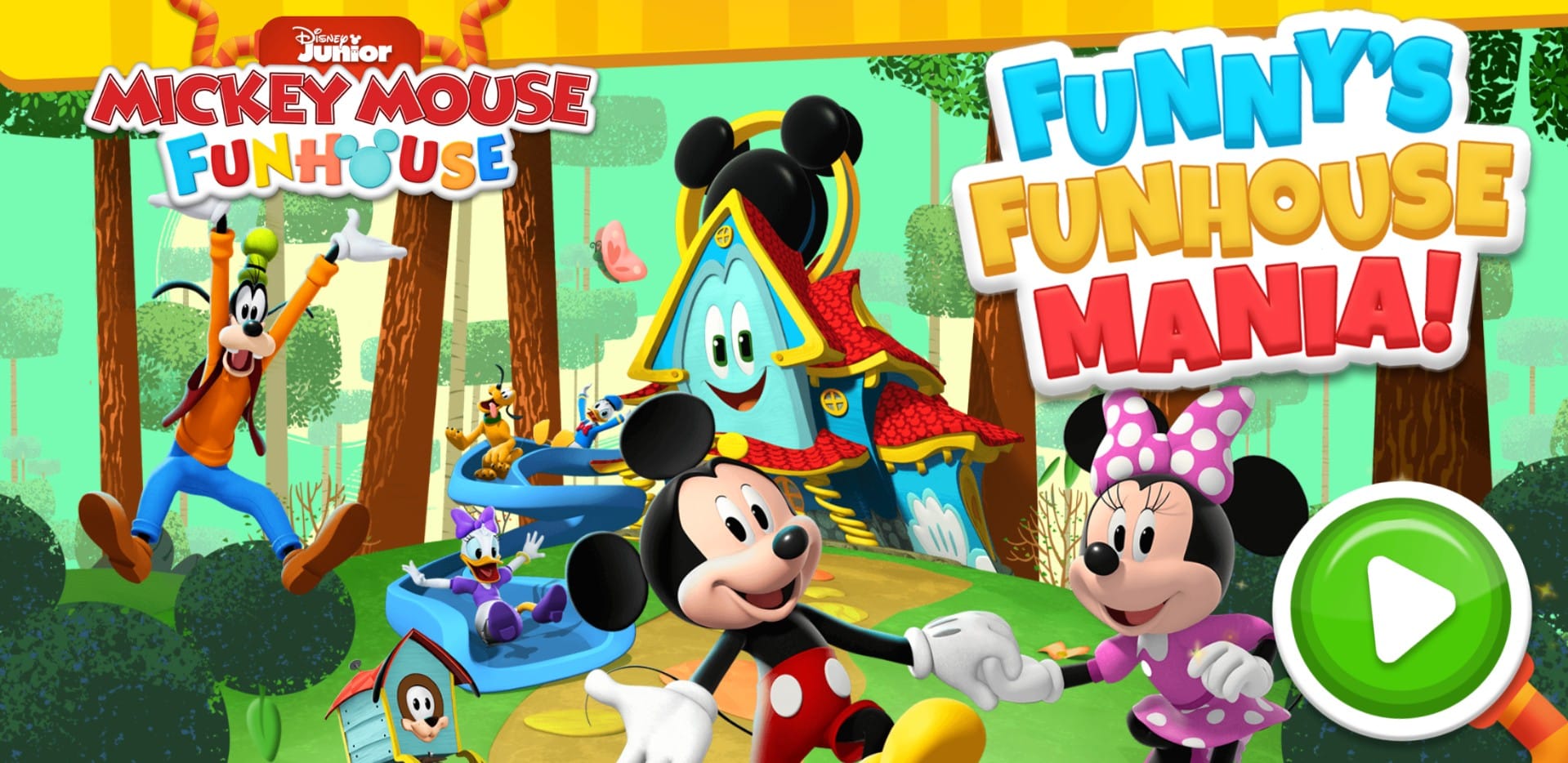
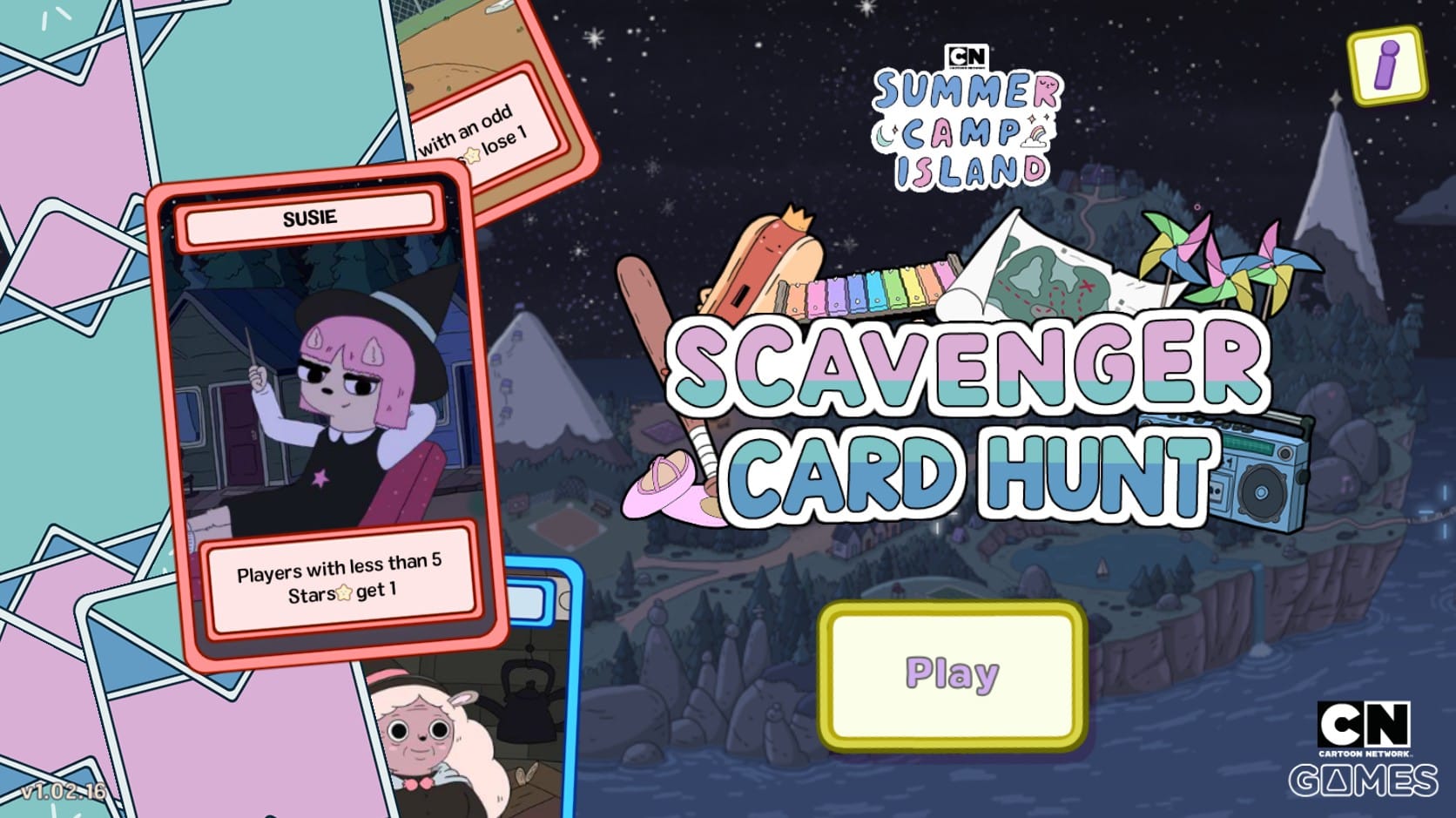
The economics of this channel favour breadth, because you cannot know in advance which three titles a given platform's social graph will pick up. Building enough distinct games in-house to find out is slower and more expensive than licensing them. Forestry Games licenses a catalogue of 1,049 titles spanning HTML5 games and Android APK games, and has developed HTML5 games in-house since 2017, including work with branded IP and brand partnerships across Disney, Nickelodeon, Cartoon Network and Warner Bros.
For an in-chat launch, the relevant questions are licence scope and technical fit: whether your agreement covers embedding on a third-party platform, whether your build can be adapted for a non-browser runtime, and how quickly you can rotate titles that do not take. Those belong in the licence conversation, not in a discovery call after you have signed.
🧭 A Sensible Order of Operations
If you have anything live on Facebook, the deadline is the only urgent item on this page. Confirm what you have, confirm whether it is a Web Game or an Instant Game, and confirm its migration status this week. Six weeks is enough time to migrate and not enough time to rebuild.
Everything else is a sequencing decision. Pick one platform, not three. Choose it on the basis of where your existing audience or your licence rights already point — not on the largest MAU number, which is the least useful figure in this entire post. Ship five to ten titles rather than the whole catalogue, instrument day-1, day-7 and day-30 retention on cohorts you can identify, and give it a full quarter before you judge it. If the retention curve holds without an incentive propping it up, expand. If it does not, you have learned something for the cost of an integration rather than a strategy.