The Aircraft Has Satellite Wi-Fi Now. License HTML5 Games That Still Run With the Internet Switched Off.
Before you license HTML5 games for an in-flight portal, check that every build runs with the internet switched off, because most of the cabin never gets online. The aeroplane is the strictest deployment target in the licensing business, and strict in a way that never shows up in a demo. Every build looks fine on a laptop in an office. Put the same one on a server bolted into an overhead bin — no route to a CDN, no ad call, no analytics beacon, no font host — and a chunk of the catalogue quietly stops working. Here is what to check, what to write into the licence, and why games are the cheapest content you can put on an aircraft.
🛩️ There Are Two Networks on the Aeroplane, and Your Game Lives on the Wrong One
Almost every onboard entertainment system is two things passengers experience as one. There is a cabin network — an access point and a media server, on the aircraft, holding the content. And there is a satellite or air-to-ground link carrying traffic to the ground. Not the same pipe, not sold together, and on a great many aircraft only the first exists.
The portal lives on the cabin network. When a passenger opens a browser and lands on the airline's menu, they are talking to a box a few metres away, over a local network that in the general case has no route off the aircraft. Portable and wireless systems are explicit about this: the Icarus IFE guide published in January 2026 describes a self-contained media server that creates a local wireless network covering the cabin with "no internet connection required", storing all content locally on 2TB-class hardware and updating over USB or Wi-Fi on the ground.
This is not a niche. Fortune Business Insights, in an August 2026 update, sizes the in-flight entertainment and connectivity market at USD 10.60 billion in 2026, growing to USD 22.50 billion by 2034 at a 9.90% CAGR, with connectivity taking 56.60% of the 2026 total and embedded seatback the largest slice of the hardware half. Connectivity spend is rising — and it is counted separately from the boxes that actually hold your games.
📡 Free Wi-Fi Is Spreading Fast — and It Is Usually Gated
The obvious objection is that satellite connectivity is arriving everywhere, so the offline problem solves itself. Look at how it is actually being sold before you plan around that.
The Upgraded Points airline Starlink guide, last updated 23 July 2026, lists sixteen carriers flying or rolling out Starlink. Some offer it free to everyone on board — Qatar Airways, Emirates, British Airways, Hawaiian, airBaltic, Virgin Atlantic, JSX, ZIPAIR. Others gate it behind loyalty membership: United (MileagePlus), Southwest (Rapid Rewards), Air France (Flying Blue), Alaska (Atmos Rewards), Scandinavian (EuroBonus), WestJet (Rewards). Copa gives it free to business class and elite members and charges the rest.
Read that as a product designer, not a traveller. On a gated aircraft, the passenger who has not signed up gets the portal and nothing else — not a defect, the design. The walled garden is what the airline can show every seat with no sign-up, and games are the part someone will actually finish in a 90-minute sector. The gate is why operators who license HTML5 games for the cabin should care more about offline behaviour as connectivity spreads, not less.
Even on a fully open aircraft, plan for the worst link on the route. Coverage has gaps, cabin bandwidth is shared across a few hundred devices, and a portal that degrades when the link drops is a portal that fails over an ocean.
🔌 What "Runs Offline" Actually Demands From a Licensed Build
"Offline-capable" is a phrase most licensors will happily agree to on a call. Turn it into a list of specific things the build must not do and the conversation gets useful fast.
- No external asset hosts. No Google Fonts, no jsDelivr, no CDN-hosted engine runtime. Every byte ships in the package and loads from a relative path.
- No analytics or telemetry beacon. A blocked analytics call is usually harmless; a blocking one in the load path is not. Ask which it is.
- No ad SDK in the boot sequence. Plenty of web builds initialise an ad mediation library before the first frame and wait on the response. On an aircraft that response never comes.
- No licence check that phones home. Sitelock validating against a remote server fails closed. Sitelock validating against a locally configured hostname is fine — but the hostname on board may be a bare IP or a non-public name, agreed in advance.
- No remote leaderboard, save or config. Scores stay in browser storage on the passenger's own device, wiped or abandoned when they land. Design the loop so a session is self-contained.
- Front-loaded assets. A game that streams a level pack mid-play is fine on home broadband and broken here.
The test costs an afternoon. Put a candidate batch on a laptop, serve it locally, pull the machine off the network and play every title from a cold cache. Whatever breaks is your real deliverables list.
🖥️ Seatback and BYOD Are Two Different Test Matrices
Buyers treat "in-flight" as one target. It is two, and the difference decides which titles you can use.
Embedded seatback. A fixed screen with a known browser, a known resolution and a known input method — usually touch, sometimes a handset. The hardware is fleet-standard, so a title that works on one seat works on every seat of that type, which makes acceptance testing cheap. The platform layer has been app-friendly for over a decade: APEX reported in August 2019 that Thales launched AVANT in 2013 on a Qatar Airways A350 as the industry's first Android-based IFE system, its CTO describing the aim as tapping developers already writing apps for smartphones and integrating them directly to the seatback. The constraint is that the screen may be several hardware generations old, with a browser to match.
BYOD over the cabin network. Whatever the passenger is holding. An eight-year-old iPad, a low-end Android on 2GB of RAM, a work laptop with a locked-down browser, a phone at 11% battery in low-power mode. You control nothing but the page you serve. This is where an HTML5 catalogue earns its keep — no install step, no store, no download over a shared link — and where a heavy WebGL title built for a gaming laptop embarrasses you.
Split the catalogue rather than hunt for titles that satisfy both: a tight set of high-fidelity titles for seatback, where you know the hardware, and a broader, lighter set for BYOD weighted toward puzzle, card, word and casual arcade — the genres that survive a bad device and a short sector.
💾 The Server Holds 2TB. Games Are the Cheapest Shelf Space On Board.
The argument that wins games their slot in an onboard content budget is arithmetic, not entertainment.
The Icarus 2026 guide puts portable system storage at 2TB or more, hardware in the USD 3,000–15,000 range depending on tier, pre-certified so no Supplemental Type Certificate is required, built to DO-160 or equivalent. Consider what competes for that 2TB. A feature film in the encodes airlines ship is measured in gigabytes, with subtitle tracks, dubs, artwork and metadata alongside it. A well-built HTML5 casual title is measured in megabytes.
Adding fifty games costs a rounding error of the storage one more film consumes, and unlike the film it does not expire at the end of a viewing window. That is also the argument for breadth over prestige when you buy HTML5 games for a cabin: long-haul passengers try several titles across eight hours, short-haul passengers want something that starts in four seconds, and neither is served by six premium games. Both are served by a wide, well-tagged library where the taxonomy does the recommending.
🗓️ The Content Cycle Is Quarterly. You Cannot Hotfix at 38,000 Feet.
Airline content does not update the way a website does. APEX described the traditional cycle in 2019 as one repeating every 90 days, with content passed between parties on tape, USB stick or hard drive and hand-carried to the aircraft from an airport-secure facility. Valour Consultancy's 2024 study on the future of IFE content — the one that put IFE content licensing revenues above USD 300 million in 2024 — made the same point, noting cloud processing could compress that 90-day cycle to under ten days.
"Could" is doing work in that sentence. Cloud delivery is real and spreading, but plenty of fleets still run on a periodic loading cycle, and the aircraft that most need a games library — older narrowbodies with portable or wireless systems — are often furthest from over-the-air updates.
Three consequences for how you buy:
- Ship the batch already correct. There is no patch window. A title that crashes on one seatback browser stays crashed for a cycle, on every aircraft of that type.
- Buy rotation, not a one-off drop. If the system reloads quarterly, you need a supplier who hands you a fresh, tested tranche on that rhythm and commits to it in the agreement, not in an email.
- Get the metadata in the same delivery. Titles, descriptions, tags, thumbnails and language strings are what the portal UI renders. Chasing them separately costs a cycle.
💸 No Ad Server, No Payment Rail — So Price It as a Service, Not a Split
On a portal with no internet route, the two default monetization models for licensed games are simply unavailable. Rewarded video needs an ad server to answer. In-app purchase needs a payment processor to authorise. Neither is reachable from seat 34C.
This is clarifying rather than depressing. Games get bought the way an airline buys any other cabin amenity: a flat content fee, scoped by fleet or by cycle, justified by passenger experience scores. The commercial conversation is shorter and more honest for it — no revenue-share modelling on impressions nobody can serve, no argument about attribution. You are pricing content, delivery and refresh cadence.
And where the connectivity gate exists, the catalogue carries more weight than that framing suggests. On a carrier reserving free Wi-Fi for loyalty members, the offline portal is the entertainment product for everyone else on board — a sign-up incentive and a complaint-avoidance measure that costs less storage than one film.
🚫 Five Ways an Onboard Games Package Fails Late
- Accepting the build the supplier ships to web portals. It is tuned for a browser with internet access. Ask for the offline variant explicitly, in writing, and test it disconnected.
- Testing on modern hardware only. The oldest seatback generation in the fleet and the cheapest Android in economy are your real test devices. Source both before the batch is approved.
- Ignoring language. An airline flying six markets needs the interface strings, not just the game. A title with English baked into the artwork cannot be localised at all — find that out during selection, not after loading.
- Buying volume with no taxonomy. Two hundred titles behind one unsorted grid performs worse than forty sorted by genre and session length. The metadata is the product.
- Assuming the territory clause covers you. An aircraft crosses jurisdictions and spends much of its time over international waters, so a licence scoped to a country list is ambiguous in the cabin. Get worldwide in-flight scope written down.
📋 The Clauses to Settle Before the Batch Ships
Take these to the supplier in the first email rather than the fifth:
- Self-hosting rights. Permission to place the files on a server you control, on the aircraft, with no call back to the licensor's infrastructure.
- Offline operation warranted. Not "should work" — a stated commitment that the delivered builds function with no outbound network access, and a named remedy if they do not.
- Scope by fleet, not by domain. Web licences are written around a URL. Yours needs to name aircraft, systems or a fleet, and cover both seatback and passenger-device delivery.
- Refresh cadence. How many new or replacement titles per cycle, delivered how many weeks before the loading date.
- Deliverables schedule. Builds, thumbnails, metadata, language files, and a per-title compatibility note covering minimum browser and screen size.
- Branding rights. Whether you can apply the airline's colours, logo placement and splash treatment to the portal shell and, where applicable, inside the titles.
🎯 How It Works When You License HTML5 Games From a Direct Licensor
Forestry Games has operated since 2017 and licenses a catalogue of 1,049 titles spanning HTML5 and Android APK builds, with titles also published on Google Play and the App Store. For an onboard deployment that matters specifically: one licence conversation covers the browser builds a wireless or seatback portal serves and the APK builds an airline or lounge operator might want for tablets and Android devices — not two suppliers and two contracts. Builds are delivered for self-hosting, with source available where applicable, so files can sit on a media server with nothing pointing outward. Branding and portal delivery are part of the service, which is what a white-label game portal has to mean when the shell is the airline's and the catalogue is licensed. To scope an aircraft deployment, start with the games for airlines and in-flight entertainment pages and the full catalogue; the broader HTML5 game licensing options cover portals and campaigns beyond the cabin.
🧸 Licensing Branded Games for Cabins, Campaigns and Portals
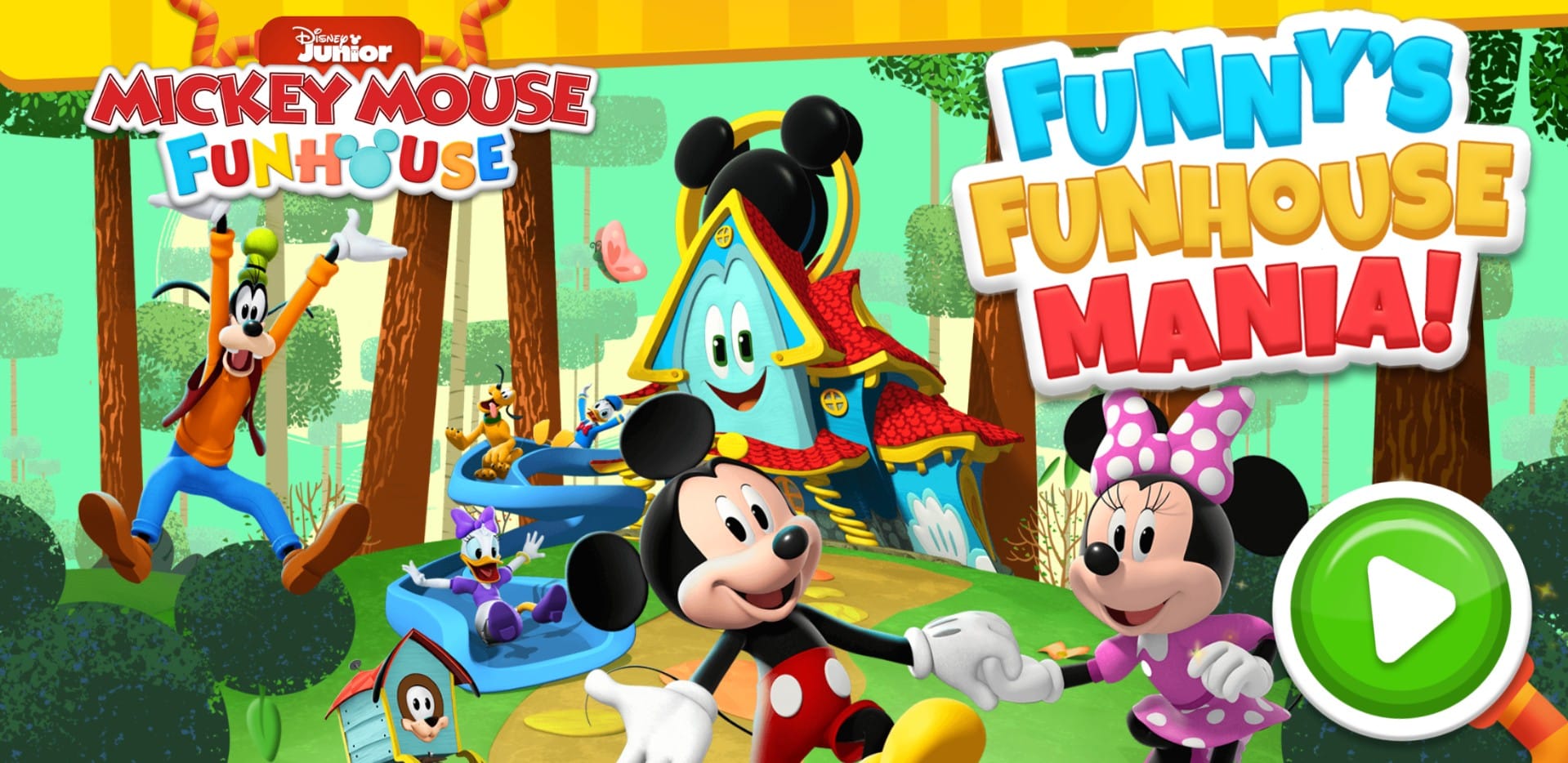
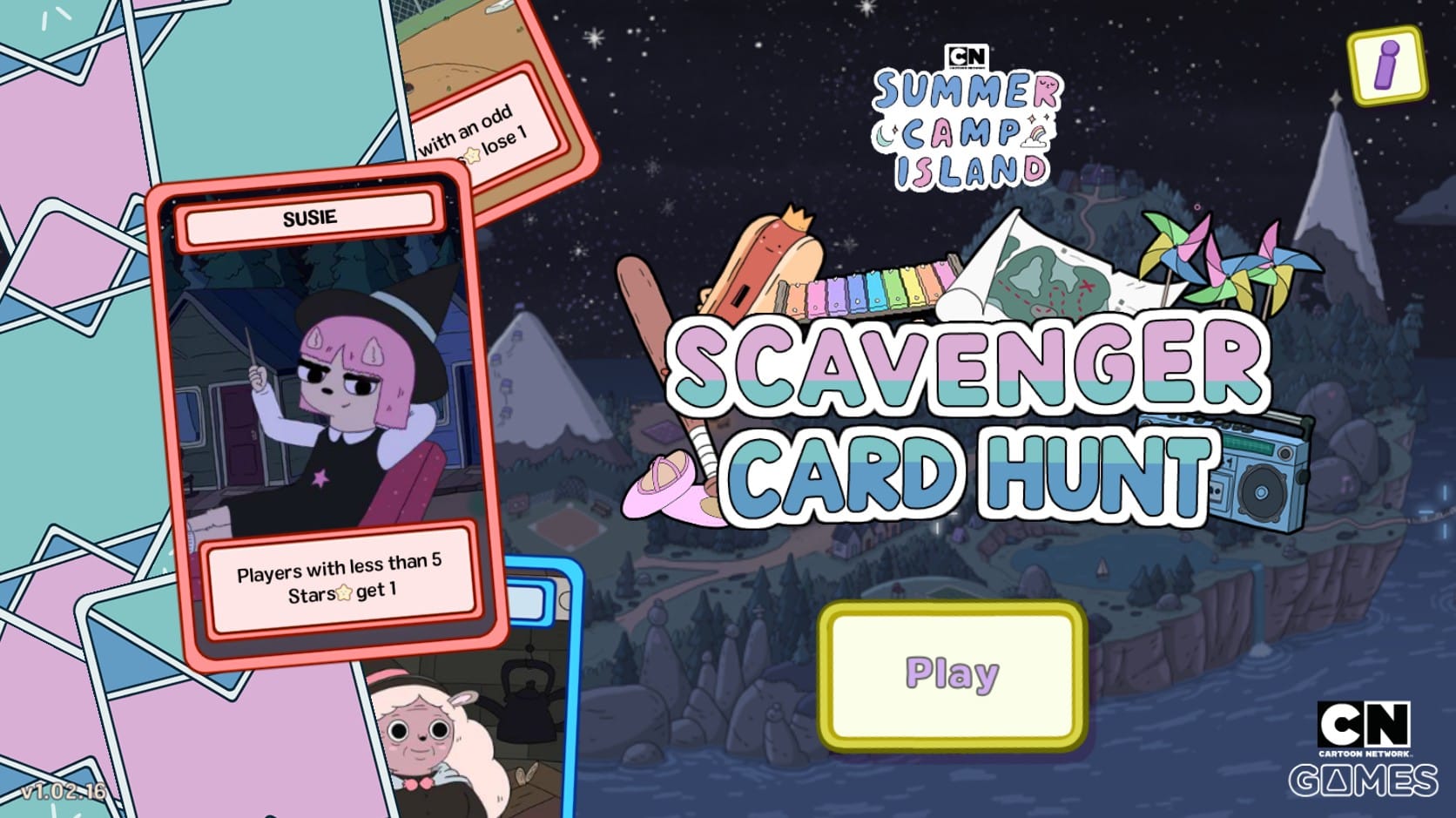
Family cabins are a distinct audience with a distinct problem: a child with four hours to fill and a parent who would like to sleep. Branded content is what makes a kids' section feel like a destination rather than a folder. Forestry Games works with branded IP and has brand partnerships including Disney, Nickelodeon, Cartoon Network and Warner Bros, and businesses can license branded games through it for campaigns, portals, events and apps. Branded titles carry extra approval and compliance requirements that take calendar time — raise them at the start of a content cycle, not in the final month. If a branded section is on your roadmap, ask for a licence scope naming the properties, territories and delivery formats you need before the plan is fixed.
✅ Ask for the Offline Build Before You Ask for the Title List
Selection is the fun part of an in-flight games deal and the part that matters least. Nearly every failure here is technical and arrives after loading, when a title that worked in every meeting sits on a seatback screen waiting for a font file that will never come. Reverse the order: ask for the disconnected build, test a batch with the network cable out, then argue about which forty titles go in the first tranche.
To scope an onboard catalogue for the next cycle, send a supplier three things — your seatback hardware generations, your BYOD device mix, and your loading calendar. Any licensor worth signing with will come back with a shortlist built around those constraints instead of a spreadsheet of titles. That is the difference between a catalogue that flies and one that is quietly dropped at the next reload.