You Bought One Games Licence and Shipped It to Nine Clients. Sublicensing Is the Clause That Decides Whether That Was Allowed.
If you license HTML5 games for client work, the sublicence clause decides whether you may put a single title into a client's product. Most are silent.
The purchase feels identical either way. You pick titles, agree a fee, receive builds. Nothing in that process asks who the player will be, whose domain the game will sit on, or how many separate businesses will end up with it live. So campaign agencies buy a handful of titles for an activation, platform vendors buy a catalogue for "the product", and both meet the question at the worst possible moment — when a client's legal team asks to see the chain of rights, three days before launch.
This is not paperwork pedantry. Sublicensing is one of the few corners of licensing where the default rule in law runs against the licensee, and where silence in the contract means no rather than probably fine.
🧾 Silence Means No, and It Means No in Both Directions
The leading US authority is Gardner v. Nike, 279 F.3d 774 (9th Cir. 2002). Nike licensed a cartoon character to Sony Music in 1992 for records, packaging and merchandise. The agreement said nothing about assignment. In 1996 Sony passed its rights to Gardner without asking Nike. The Ninth Circuit held that an exclusive licensee "has the burden of obtaining the licensor's consent before it may assign its rights, absent explicit contractual language to the contrary." The stated policy reason matters more than the facts: a licensor that cannot see who is exercising its rights cannot monitor how they are being used.
English law lands in the same place by a different route. As LexisNexis UK's guidance on sub-licensing intellectual property rights sets out, there is no statutory right to sub-license, and the statutes that do address it — section 30(4) of the Patents Act 1977, section 28(4) of the Trade Marks Act 1994 — frame a sub-licence as grantable only so far as the head licence provides for it. That is the opposite of the general contract-law instinct, where a party can usually sub-contract its performance unless told otherwise.
Translate that into your position. An agency holding "a licence to use 200 HTML5 games" has, unless the paper says more, a licence for the agency to use them. Deploying those builds on nine client domains, under nine client brands, for nine businesses that never signed anything, is not use. It is distribution to third parties, and it needs a right you were not automatically given.
🪞 Four Businesses Buy the Same Catalogue for Four Different Reasons
The word "client" hides four quite different structures, and they need different clauses.
- The campaign agency. One or a few titles, six to twelve weeks, live on the client's domain under the client's brand. The agency pays; the client benefits. The whole question is whether that client is named anywhere.
- The platform vendor. A loyalty suite, an engagement tool, telco middleware, an HR platform. One codebase, one deployment, N customers. Every new customer signed is a new beneficiary of the same licence — and this is the shape most likely to be out of scope, because nothing about onboarding customer forty feels like a licensing event.
- The reseller. Sells the catalogue onward as its own commercial line. Needs an express distribution or sublicence right and the ability to grant downstream terms that mirror the head licence.
- The agent. Holds and administers rights on behalf of a represented client rather than for itself. This is a mature structure, not an edge case: License Global's 2026 top agents report puts retail sales of licensed consumer products handled by agents on behalf of represented clients at $117.7 billion for 2025, with roughly $56.4 billion in North America, $22.3 billion in APAC, $20 billion across Europe and the UK and $11.1 billion in Latin America.
Which of those you are is not a matter of self-image. It is decided by who the end beneficiary is and how many of them there are. A single agency can be all four in the same year, on four different accounts, under one badly drafted master agreement.
Worth noting where the buyer is drifting, too. The ANA's 2023 in-house agency research found 82% of its members operated an in-house agency, up from 78% in 2018 and 42% in 2008. The party that ought to hold a games licence for a brand campaign is increasingly the brand itself, which changes who should be the licensee of record and shortens the chain by one link. If you run games for marketing campaigns for clients who are building internal teams, expect more of them to want the contract in their own name.
One honest caveat on market sizing. Published 2026 gamification market estimates diverge far too widely to plan against: Coherent Market Insights puts 2026 at about $16.0 billion, while StartUs Insights cites roughly $36.5 billion for the same year. When two firms differ by more than 2x on the same twelve months, the number is telling you the category is growing and nothing reliable about its size. Use it to justify attention, never to justify a forecast.
🔀 "Can We Use It for Clients?" Is Five Questions Wearing One Coat
When a supplier answers that question with "yes, of course", they have answered one of these and left four open.
- Who is the licensee of record? You, with a right to extend to clients, or the client, with you as implementer? These produce different invoices, different renewal risk and different outcomes when you lose the account.
- How many downstream beneficiaries, and are they counted? Named entities, a capped number, an uncapped class, or a per-tenant model. Uncapped-and-unreported is the version that blows up at renewal.
- Whose origin serves the build? Hosting rights and sublicence rights are separate clauses that constantly get conflated. You can have permission to put a client's logo on a game you have no right to serve from the client's domain.
- What happens when the client relationship ends? Does the game come down, transfer, or sit in limbo on a domain you no longer control? Somebody has to be contractually able to remove it.
- Can the downstream party sublicense onward? Almost always this should be a flat no. A client's own reseller network is not something your head licence contemplated.
🧯 Five Ways This Goes Wrong in Practice
- The pitch ships before the clause. The deck promises a branded game on the client's site; procurement then asks for the rights chain and the agency discovers it holds an internal-use licence.
- "Non-exclusive, worldwide" gets read as "for anyone". Non-exclusive describes whether other licensees exist alongside you. Worldwide describes territory. Neither says a word about who may exercise the rights.
- The multi-tenant platform never counts tenants. Renewal arrives, the licensor asks how many customers have the games live, and nobody in the building has that number — which is also, awkwardly, the number the pricing should have been based on.
- The campaign gets extended and nobody reopens the paper. A six-week activation that performs well becomes a permanent site feature in three markets. New term, new territories, same expired scope.
- Termination has no wind-down. The agreement ends cleanly on paper while nine live deployments carry on serving, because no one agreed who takes them down or in how many days.
📄 The Clause Language That Survives a Client's Legal Review
You do not need bespoke drafting. You need seven things present and specific.
- An express sublicence right, using that word. "Client use is fine" in an email is not it.
- Defined scope: how many downstream entities, named or by class, plus territory, term, and permitted platforms — web, Android APK, in-app, kiosk.
- Flow-down obligations: downstream terms no broader than the head licence, in writing, binding the downstream party directly on IP, branding and removal.
- No onward sublicensing below the second tier.
- Reporting: who is live, on which domains, from what date. Make it a light periodic obligation rather than an audit event.
- Survival and wind-down: what happens on termination, who removes builds, and within how many days.
- Warranty and indemnity that names downstream use. An indemnity covering only your own use is not much comfort when the claim lands on your client.
🧮 A Sublicence Right Has a Price, and That Is Not a Red Flag
Expect to pay for it. Value tracks beneficiaries, so licensors price by beneficiaries: per client, per tenant, in bands, or as a flat platform rate that assumes a ceiling. That is normal commercial behaviour and it is negotiable in structure as much as in number — a vendor with sixty small tenants and one large one usually wants banding, not a per-seat rate.
Be more suspicious of the opposite. A supplier offering unlimited onward sublicensing, free, with no reporting and no cap, is either not thinking about it or does not hold the upstream rights required to grant it. Ask what they license in from whom before you build a product line on top. Where a licensor publishes its licence and pricing structures openly, you can at least see which model you are being fitted into.
📋 Six Questions to Answer Before the Next Client Signs
- Is the licensee on our current agreement us, or a client we no longer work with?
- How many distinct end businesses have our licensed games live right now — exact number, not an estimate?
- For each one, whose domain serves the build?
- Does our agreement contain the word "sublicence" or "sublicense" anywhere?
- If we lost our three biggest accounts tomorrow, who is contractually obliged to take the games down?
- When our head licence renews, does the price we are quoted depend on a number we can actually produce?
🎯 How It Works When You License HTML5 Games From a Direct Licensor
The practical advantage of licensing direct is that the party you are asking about sublicensing rights is the party able to answer. Forestry Games has operated since 2017, develops HTML5 games in-house and licenses a catalogue of 1,049 titles spanning HTML5 and Android APK builds. A licence conversation covers what actually gets delivered — HTML5 builds, APK builds, source where applicable, branding options — and where those builds are hosted, on your infrastructure or ours.
For agency and platform work, catalogue depth is the point: nine clients rarely want the same nine genres, and one supplier relationship covering both web and Android is one sublicence structure to negotiate instead of five. You can browse the catalogue and come to the scoping conversation with the downstream entities already listed.
🧸 Licensing Branded Games for Campaigns, Portals and Events
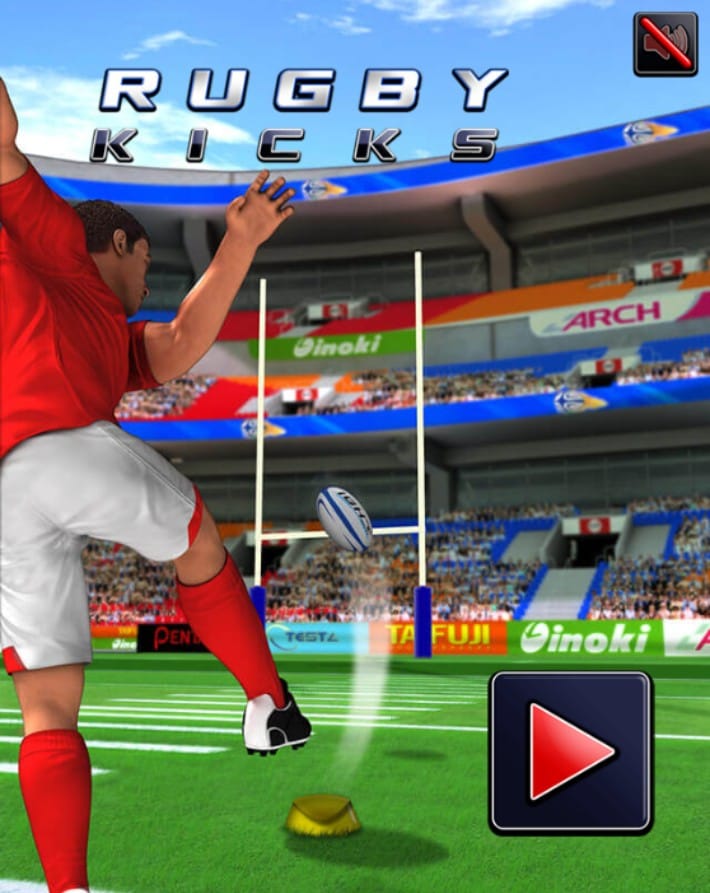
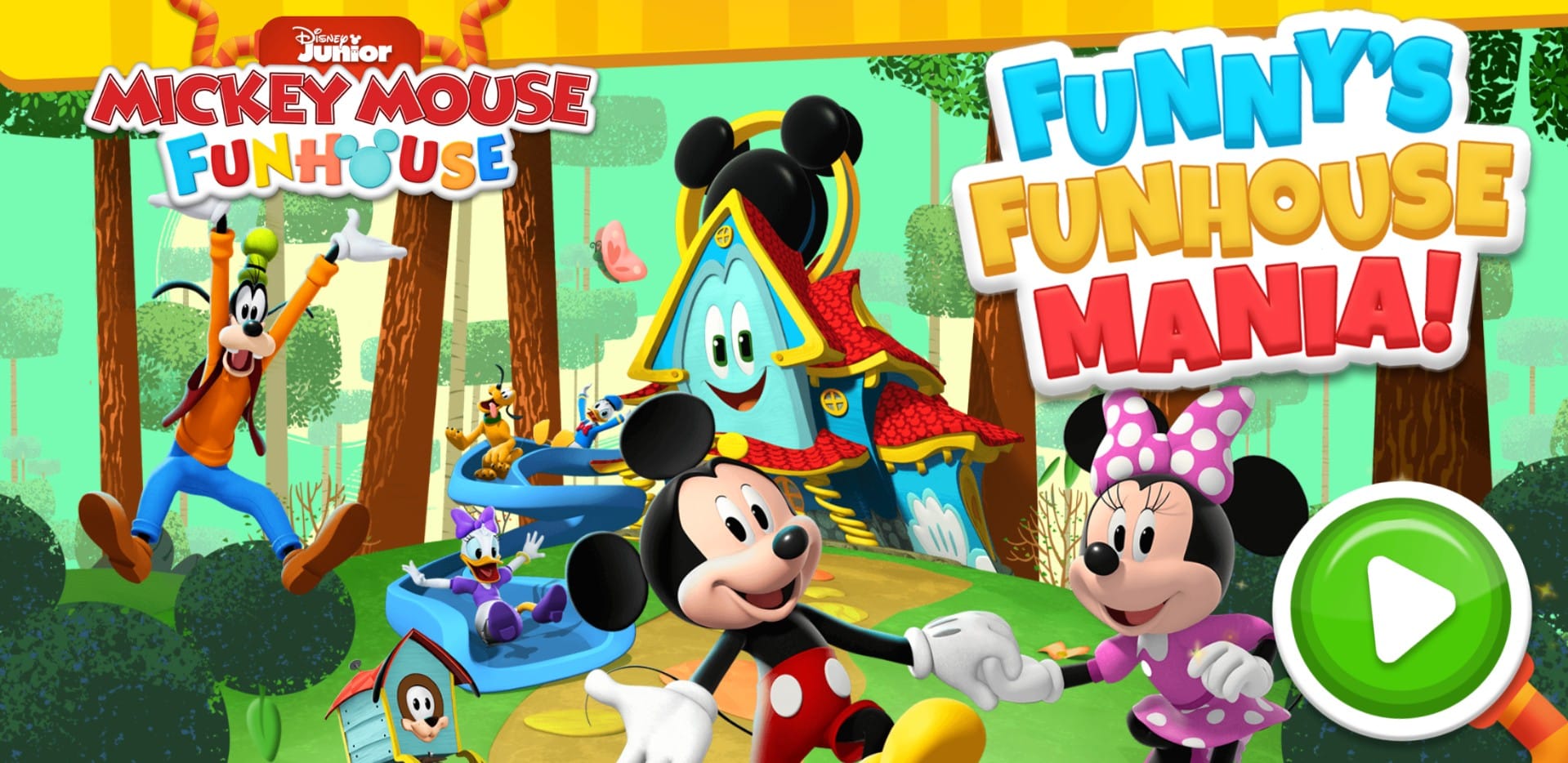
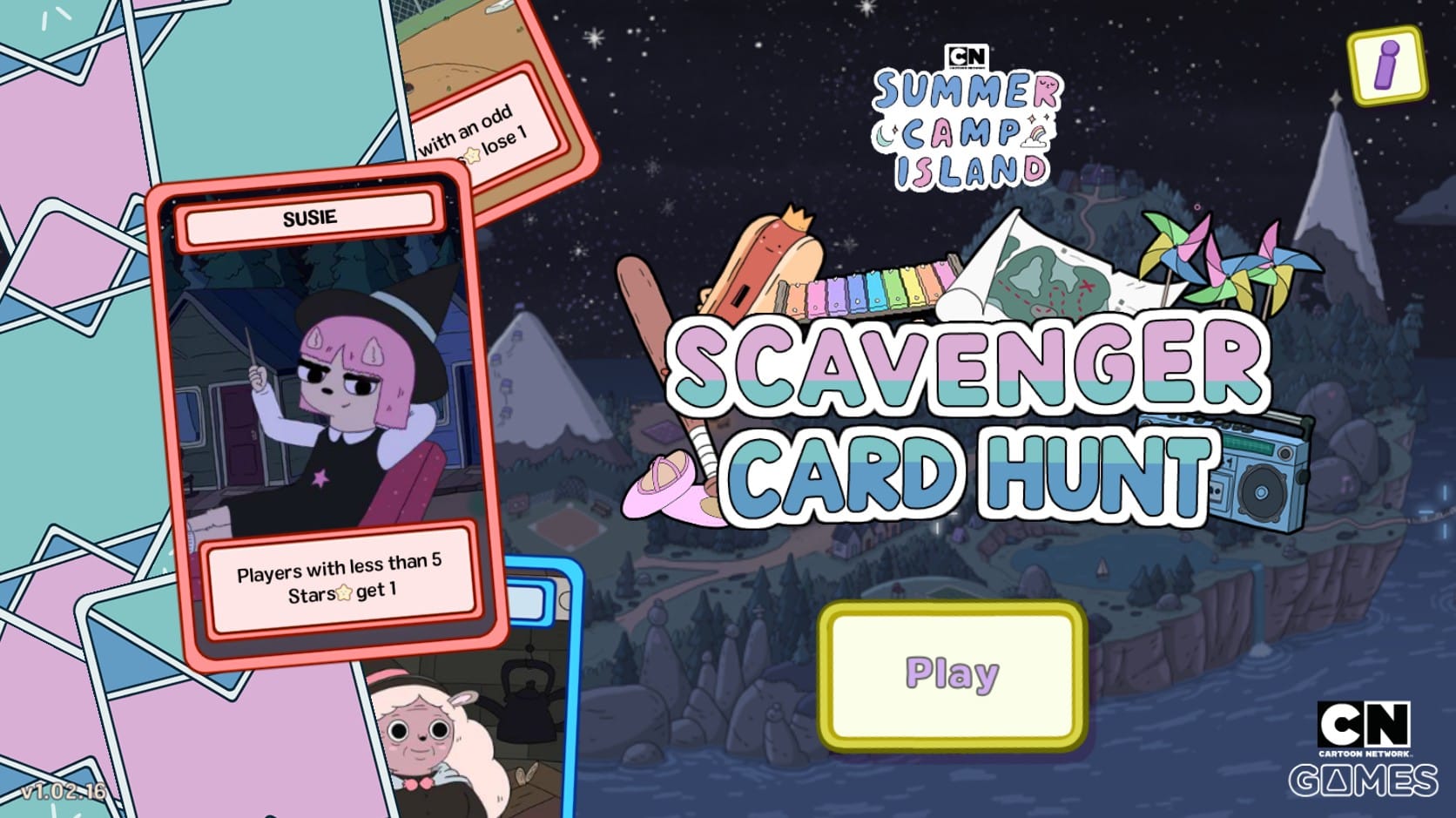
Forestry Games works with branded IP and has brand partnerships including Disney, Nickelodeon, Cartoon Network and Warner Bros. Businesses can license branded game content through Forestry Games for campaigns, portals, events and apps. Branded titles carry an additional approval layer on top of the ordinary licence, which is precisely why the downstream party should be named at the enquiry stage rather than introduced later. If your work is client-facing, say so in the first email — it changes the scope you are quoted. Start by exploring what you can license HTML5 games for, then ask for a licence scope covering your clients, or request a white-label portal demo.
🧭 Put the Client's Name in the Licence Before You Put the Game in the Pitch
The cheapest version of this problem is a five-minute question at enquiry: "we are an agency and this will run on our clients' properties — what does that change?" The expensive version is the same question asked by somebody else's general counsel, in week eleven of a twelve-week project, about a deployment that is already live.
Do the audit this week. Open your current games agreement, search it for "sublicen", and count how many businesses outside your own are relying on whatever you find. If those two numbers disagree, fix the paper before the next client signs — and when you next scope a catalogue, bring the list of downstream entities into the first conversation rather than the last.