Booth Games That Earn Their Floor Space: How to Brief a Trade Show Game Around Lead Quality
A trade show booth game earns its floor space by qualifying leads, not by drawing a crowd. Here is how to brief, build and measure event games that convert.
The most expensive booth game I have watched run did exactly what it was asked to do. It pulled a queue eight people deep for three straight days, the branded merch ran out by lunchtime on day two, and the client's team came home delighted. Then sales worked the list. Almost none of the badges belonged to anyone with a budget, a project, or a reason to take a call. The game had been briefed as a crowd puller, and it pulled a crowd. Nobody had briefed it as a lead qualifier, so it did not qualify anyone.
That gap — between attention and intent — is the whole problem with booth games, and it is a briefing problem far more often than it is a game problem.
🎪 The Floor Is the Expensive Part, and It Is Not Getting Cheaper
The exhibition business is growing, but slowly, and against real cost pressure. The 2026 CEIR Index Report, released by IAEE on 4 May 2026, forecasts the CEIR Total Index to grow 2.1% in 2026. The index is produced by the Center for Exhibition Industry Research with Tourism Economics, an Oxford Economics company, and tracks four metrics across 14 US exhibition sectors: net square feet of exhibit space sold, professional attendance, number of exhibiting companies, and gross revenue.
The caveat in that release matters more than the headline. Adam Sacks of Tourism Economics notes that "trade policy uncertainty and elevated costs continue to weigh on business sentiment, while geopolitical tensions and higher travel expenses could affect international participation," and that this may produce uneven performance across sectors and events.
Read that as an exhibitor rather than an analyst. Space, build, freight, drayage, travel and staff time are all being paid at elevated cost for low single-digit growth in the audience those costs buy. Every square metre of your stand now has to justify itself against a tighter number. A game occupying a corner of that stand is not a nice-to-have decoration — it is floor space you are renting at the same rate as everything else, and it should be held to the same standard as the demo station next to it.
🤝 Attendees Have Already Said What They Want From Your Stand
The Freeman Trends Report published on 23 July 2026, based on a survey of more than 3,300 attendees and exhibitors, found that attendees would ideally spend 54% of their learning time outside traditional session rooms — and at trade shows specifically, that figure rises to 64%.
Two more findings from the same report are worth pinning to the wall before you write a booth brief. Attendees rate learning from networking and exhibitor engagement as slightly more valuable than traditional conference sessions. And only 19% cite continuing education credits as a primary reason for attending — they are there for ideas they can apply immediately, not for credentials.
So the appetite for something hands-on at your stand is real and measurable. What the data does not say is that people want to play a generic arcade game with your logo on it. It says they want to learn something through doing rather than sitting. That is a much more specific instruction, and it is the one most booth games ignore.
A note on the statistics you will be quoted
If you search for booth engagement benchmarks you will find confident numbers everywhere: average dwell time, leads per show, exhibitor ROI ratios. Chase them to their source and most dissolve. They circulate between vendor blogs, each citing the last, with no methodology and no sample behind them. I am deliberately not repeating them here. Build your model on your own show data from last year, which is imperfect but at least real, rather than on a figure whose origin nobody can name.
🎯 A Queue Is Not a Pipeline
Here is the uncomfortable mechanic behind the prize-driven booth game. A high-value prize with a low skill barrier optimises for the people with the most free time and the least buying authority on the floor. Students, contractors between sessions, staff from other stands, and the professional badge-scan collectors who work a show for giveaways. They are lovely. They are not your market.
The fix is not to remove the game. It is to invert what the game optimises for:
- Short rounds beat long rounds. Sixty to ninety seconds of play, hard-capped. A senior buyer will give you ninety seconds. They will not give you five minutes, and a five-minute round builds the queue that makes them walk on.
- Relevance beats spectacle. A game whose mechanic maps onto your product's actual problem domain filters the audience for you. People who do not have that problem lose interest at the instructions screen, which is exactly what you want.
- Prizes should be worth less than a conversation. When the prize is the point, you have bought attention from people optimising for prizes. Make the leaderboard and the bragging rights carry the motivation, and keep the reward modest.
- The staff member is part of the game. The game's job is to buy your rep ninety seconds of standing next to someone with a shared thing to talk about. If the game is fully self-service, you have installed an arcade cabinet, not a lead tool.
📝 What Actually Belongs in the Brief
Most booth game briefs specify a theme, a logo, and a deadline. That is not enough information to build the right thing. Here is what a usable brief covers.
Round length and reset behaviour
Specify the maximum round length in seconds, and specify what happens when a player walks away mid-round. On a busy floor, abandoned sessions are constant. The game needs an idle timeout that returns to the attract screen and clears any partially entered personal data — both so the next player gets a clean start and so nobody's half-typed email sits on a screen in public.
Where the capture step sits
This is the single most consequential decision in the brief, and it has three defensible answers.
- Before play: highest capture rate, lowest lead quality, highest drop-off at the barrier. Reasonable when the show is huge and you need volume.
- After play, to join the leaderboard: usually the best balance. The player has invested effort, the score gives them a reason to submit, and anyone who declines was never going to answer your email.
- Never — the badge scan is the capture: the cleanest experience by far, and the right answer when the show's lead retrieval system is decent. The game exists to create the conversation; the scan happens in it.
Pick one deliberately and write down why. What you must not do is bolt a fourteen-field form onto the end of a ninety-second game and expect it to be filled in honestly.
Hardware, orientation and hygiene
Tablets in portrait on a rail, a large touchscreen in landscape, and a laptop with a controller are three genuinely different design problems. Specify the device, the orientation, the screen size and the viewing distance up front. Specify whether input is touch, mouse or a physical control. And specify kiosk mode: the browser must launch full-screen without chrome, without an address bar, without a route to the rest of the internet, and it must relaunch automatically if it crashes or the device restarts overnight.
Attract loop
Screens that sit idle showing a static title card are invisible in peripheral vision. Screens with motion are not. An attract loop — a short demo of gameplay running on repeat — is the cheapest traffic driver in the entire booth and is almost always missing from the brief.
📶 Assume the Venue Wi-Fi Fails, Because It Will
Convention centre networks fail predictably at the worst moment: mid-morning on day one, when every exhibitor and every attendee is on them at once. If your booth game needs a live connection to render a level or submit a score, it will be dead during the busiest hour of the show you paid the most to attend.
Design for that from the start:
- Ship the entire game — assets, audio, logic — to the device before the doors open. If it is a web build, that means a service worker caching everything, then verifying it loads with the network physically switched off.
- Write leaderboard entries and captured leads to local storage first, and sync them upward when a connection is available. Never make a lead capture depend on a live POST succeeding.
- Test the offline path on the actual hardware, on site, before the floor opens — not on your desk on office Wi-Fi. Bring a hotspot as backup and do not rely on that either; cellular on a packed floor is its own kind of unreliable.
This is a substantial part of why browser-based builds have taken over the event category. A packaged HTML5 game runs full-screen on any tablet, laptop or large touchscreen you can rent locally, needs no app store approval, no install queue, and no per-device provisioning. When a tablet dies at 11am you swap in a spare and open a URL. That resilience is worth more on a show floor than any amount of graphical polish.
🔐 Consent Is Part of the Game Design, Not a Legal Footnote
If you are exhibiting anywhere the GDPR applies, or handling EU or UK attendee data from anywhere, the capture step has requirements that shape the interface itself. Cvent's practical GDPR guide for events is a decent orientation if this is new to you, and your own counsel should confirm the specifics for your shows.
The design implications are consistent regardless of jurisdiction:
- Consent to play and consent to be marketed to are different things. Do not bundle them. A player must be able to play, and to appear on the leaderboard, without agreeing to a sales follow-up.
- Consent has to be an affirmative action. Pre-ticked boxes and buried terms do not clear the bar, and a hurried tap on a busy floor is exactly the situation regulators have in mind.
- Log what was agreed and when. A timestamp and the wording shown at the moment of capture, stored with the lead record. This is trivial to build in and impossible to reconstruct later.
- Decide the retention period before the show, not after. Someone has to own deleting the leads that never converted.
📊 The Numbers Worth Instrumenting
Booth games are usually reported on with a single figure — plays, or scans — which tells you almost nothing. Instrument these instead, and have them logged automatically rather than tallied by an exhausted rep at 6pm:
- Starts versus completions. A low completion rate means the round is too long, too hard, or too dull. This is the fastest signal you have, and you can act on it mid-show by tuning difficulty overnight.
- Capture rate on completed plays. If it is very low, the form is asking too much. If it is very high but the leads are junk, the game is attracting the wrong people.
- Plays per hour by hour. Tells you when your staffing was wrong and whether the attract loop was doing its job.
- Qualified conversations per staffed hour. The one that matters. A rep marks it manually, right there. Compare it against the same rep's rate at the demo station with no game involved.
- Cost per qualified lead, game included. Build cost plus the amortised floor space, divided by qualified leads attributable to the game. Run it against your other lead sources at the same show. Sometimes the honest answer is that the game lost, and you want to know that before you commission the next one.
Follow-up speed is the other half of this and it is entirely within your control. The lead file should be in your CRM the same evening, not on a laptop in someone's hotel room until the following week. Whatever the game did for you decays fast once everyone is home.
🚫 How Booth Games Waste the Budget
Patterns I have seen repeat across event builds, in rough order of how much money they burn:
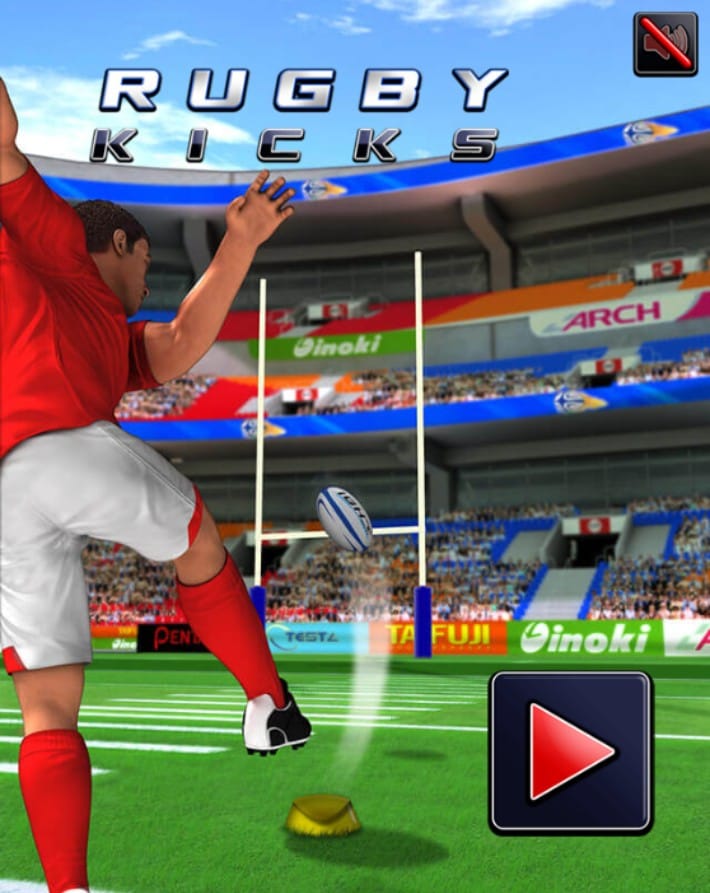
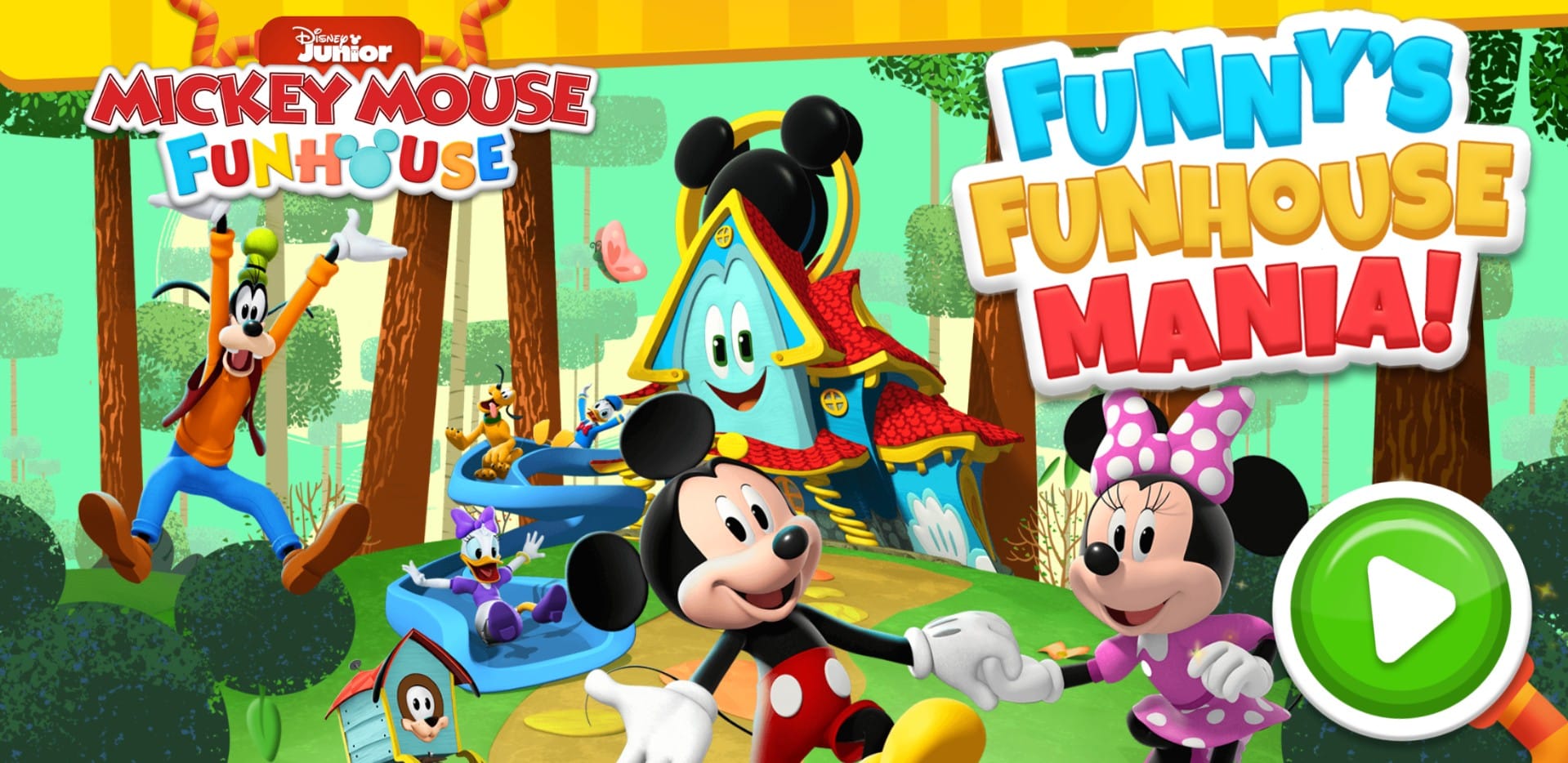
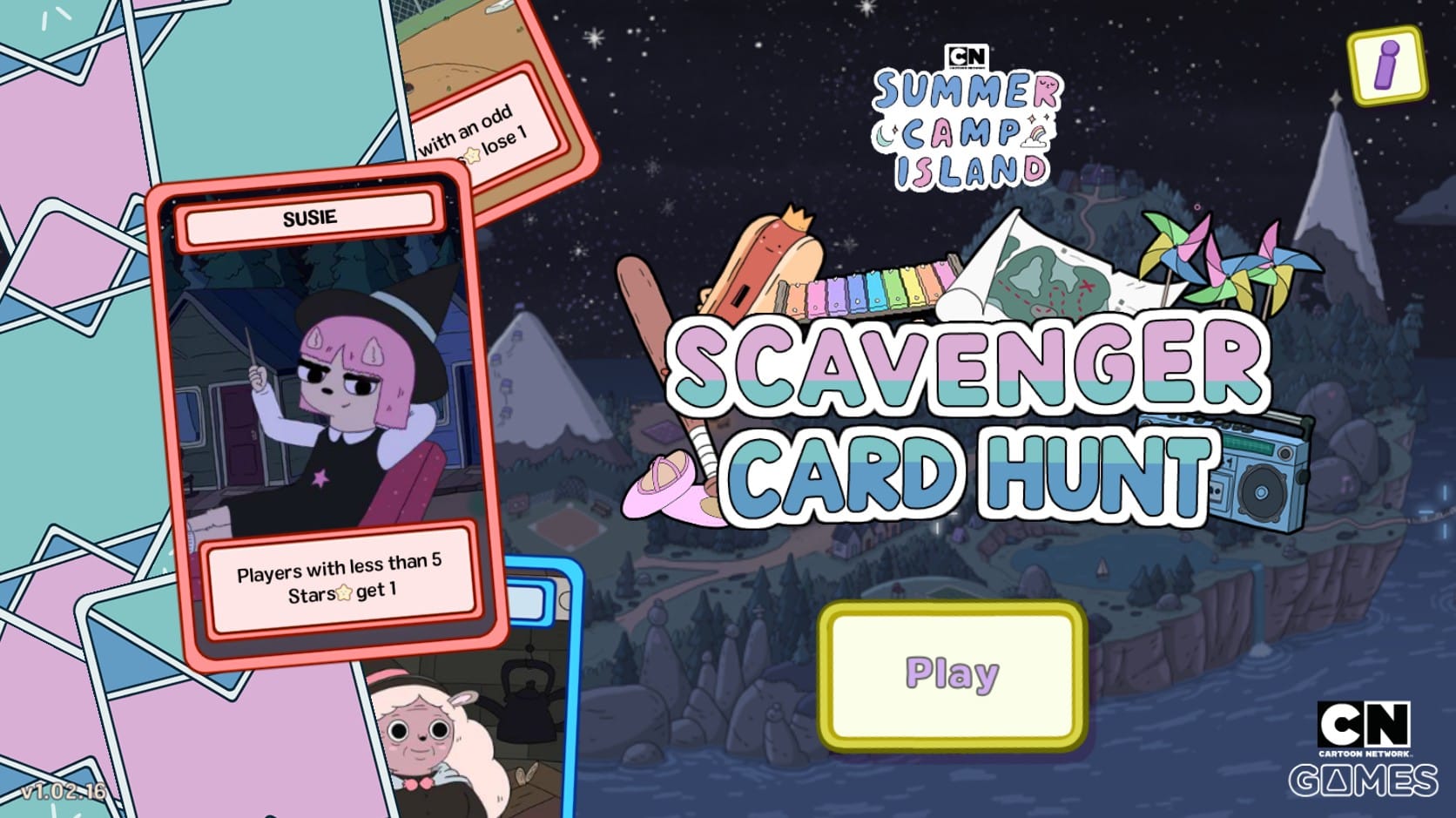
- Commissioning a custom game when a licensed one would have done. Custom is right when the mechanic must carry a product message. When the goal is simply "something engaging on the stand," a licensed title reskinned to your branding delivers in a fraction of the time and budget, and the audience does not care.
- Building the game and briefing the staff separately. Reps who have never played it cannot use it. Fifteen minutes of practice the night before is the highest-return training you will ever run.
- Optimising for the leaderboard photo. The screenshot for the internal recap deck is not the objective. Pipeline is.
- One build, four shows, no changes. The audience at a regional trade fair is not the audience at a global expo. At minimum, change the framing and the difficulty.
- Ignoring accessibility. Tiny touch targets, low-contrast text, sound-dependent cues on a floor at 85 decibels, and no seated option. You are excluding people you invited.
- Treating the show as the finish line. The game is a lead generator whose output has a shelf life of days. Build the follow-up sequence before you build the game.
🧭 Before Your Next Show
Do this in order. Pull last year's lead list for the same show and count how many became opportunities — that is your baseline, and it is probably lower than anyone in the room remembers. Decide the one thing the game must do: pull traffic to a bad stand location, qualify a broad audience down, or hold attention long enough for a real conversation. Those are three different games and you cannot have all three.
Then write the brief with the specifics above in it — round length, capture placement, hardware, orientation, offline behaviour, consent wording, and the metrics you will instrument. Get it built and tested offline on the actual devices at least a week out. Rehearse the staff. Then measure it honestly against your other lead sources at that show, and be prepared to conclude that it did not work.
Forestry Games licenses games for exactly this use — trade show games and games for events that can be branded and deployed to booth hardware, alongside custom builds when the mechanic genuinely has to carry a product message. If you are weighing licensing a title against commissioning one, the deciding question is usually whether the gameplay itself needs to teach something. If it does, build. If it does not, licence something proven and put the saved budget into staffing and follow-up, where it converts better anyway. The same logic applies to marketing games running outside the event calendar.
The booth game is not the point. Ninety seconds of shared attention with someone who has a reason to talk to you is the point. Design backwards from that, and the game gets both smaller and considerably more useful.